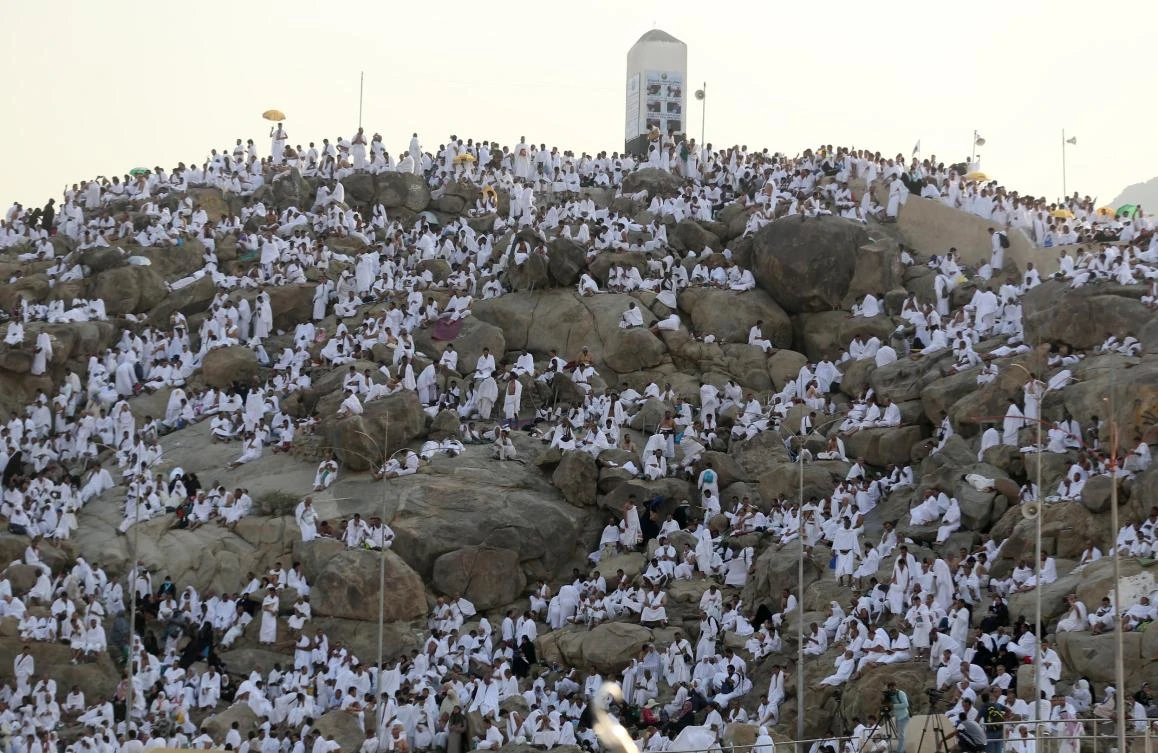
JEDDAH, 2 January 2005 — As Haj approaches, traffic at the Kingdom’s air and sea ports is rapidly picking up with more pilgrims arriving for the annual pilgrimage scheduled to take place in the last two weeks of January.
By yesterday, nearly half a million pilgrims have already arrived in the holy cities of Makkah and Madinah. The overwhelming majority, over 400,000 pilgrims, arrived through King Abdul Aziz International Airport in Jeddah (273,000) and Prince Muhammad ibn Abdul Aziz Airport in Madinah (157,000), with the remaining coming by ship through Jeddah Islamic Seaport and by land through the Kingdom’s crossing points bordering Iraq, Jordan and Yemen.
All adult able-bodied and financially sound Muslims are required to make Haj, one of the five pillars of Islam, at least once in a lifetime, on condition they have the means to do so.
Some two million pilgrims are expected to perform Haj this year. The figure last year was 1.9 million, of whom 1.5 million came from abroad.
The fist batch of Iraqi pilgrims arrived yesterday by air landing at the Haj Terminal at Jeddah airport. They were received by Haj Minister Iyad Madani and senior ministry officials. The head of the Iraqi Haj mission, Nouri Abdullah, thanked the Saudi government for the welcome accorded to pilgrims from all over the world and for facilitating the arrival and stay in the Kingdom of Iraqi pilgrims.
Iraq will this year send 30,000 pilgrims who will arrive by air. Few Iraqi pilgrims have been coming for Haj since the early 1990s as a result of armed conflicts and the subsequent sanctions imposed on the country by the United Nations following Iraq’s invasion of neighboring Kuwait.
Under a quota system approved by the 55-nation Organization of the Islamic Conference, Muslim states are required to send 1,000 pilgrims for every one million of their population. The quota was introduced to reduce congestion at the holy sites as well as the pressure this causes on the services and infrastructure. The Saudi government a few years ago began implementing a system whereby both Saudis and expatriates are allowed to go for Haj only once every five years. Violators are turned back when caught at the checkpoints mounted outside Makkah.
The Kingdom is taking extra safety measures to ensure this year’s Haj is accident free and also to avoid the kind of stampede during the ritual of stoning the devil that over the past years has claimed the lives of hundreds of pilgrims.
Under a new plan that comes into effect this Haj season, special emphasis would be given to the safety of pilgrims in the sprawling tent city of Mina outside Makkah. Extra safety measures will especially apply during the stone throwing ritual. Known as “Rami Al-Jamarat”, or the stoning of the devil, it is considered one of the most important rituals of Haj. Stampedes usually happen along the bridge leading to the stoning areas where as many as two million pilgrims would be on the move round the clock. Last year, some 250 pilgrims were crushed to death and an equal number injured in a stampede during the devil-stoning ritual.
Pilgrims are warned against indulging in any form of political propaganda during Haj. The government says anyone caught violating the country’s laws will be prosecuted. The Ministry of Haj issues rules and guidelines governing the pilgrims’ movement, stay and departure. The guidelines include arrival and departure dates as well as safety guidelines the pilgrims are required to follow to ensure a smooth and safe Haj.
The staging of political rallies are strictly prohibited and pilgrims are cautioned against carrying any pamphlets or pictures of political nature.