BANDA ACEH, Indonesia, 6 January 2005 — US Secretary of State Colin Powell said yesterday that Asia’s tsunamis had been more devastating than any disaster he had ever seen while Australia and Germany pledged a massive $1.4 billion in aid.
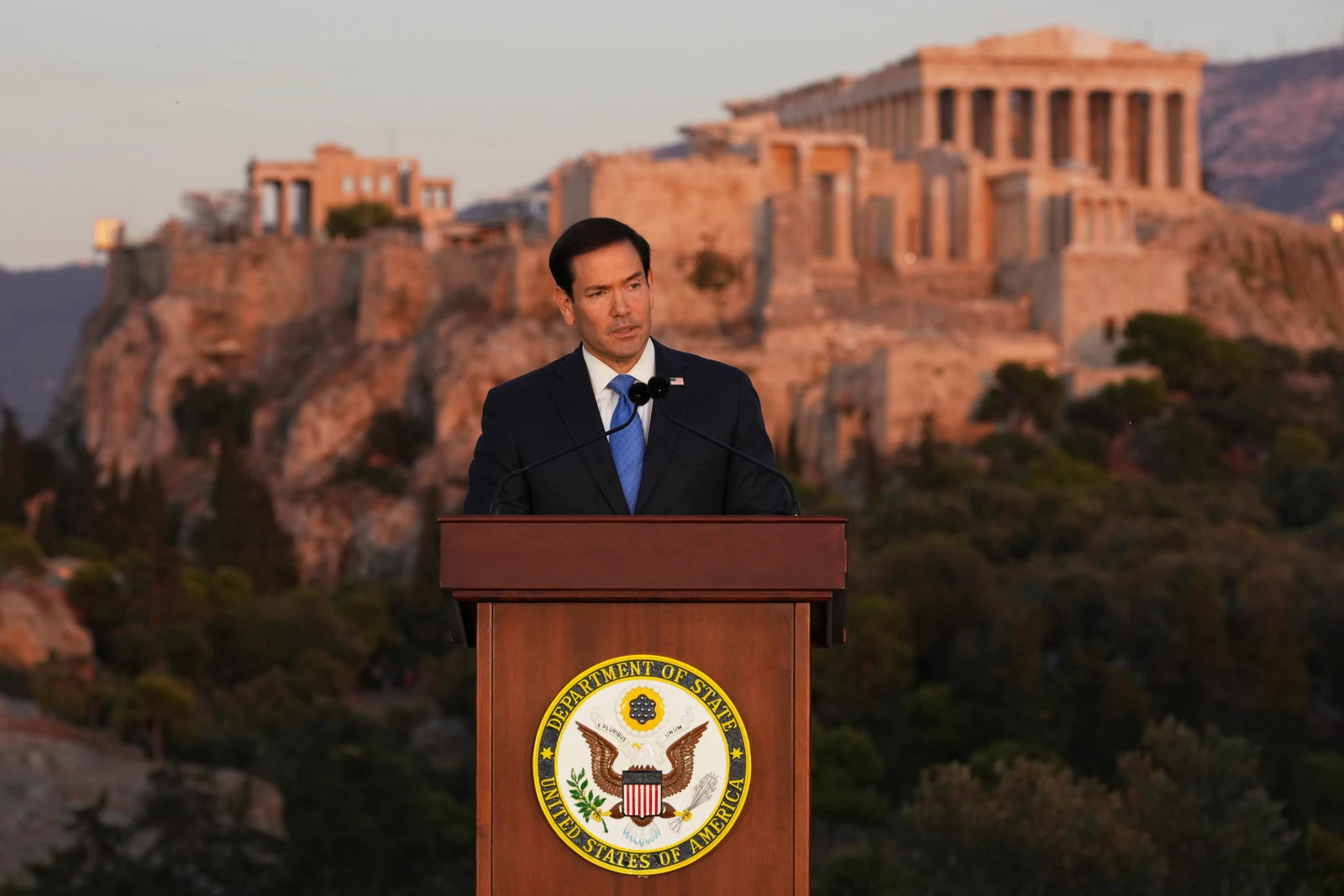
Powell toured the destruction in Indonesia’s Aceh province a day ahead of an emergency world summit in Jakarta, and with donations for victims of the Dec. 26 disaster which hit 11 Indian Ocean nations rising exponentially.
Nearly 150,000 have been confirmed dead in the four hardest hit nations — Indonesia, India, Sri Lanka and Thailand — in what the United Nations suggested could end up as one of the deadliest natural disasters recorded.
On a helicopter tour of Aceh where whole villages were swept away by the tsunami triggered by a powerful underwater earthquake off Sumatra, Powell said he gained a better grasp of the needs of countries hit by the tragedy.
“In the course of my career I’ve been in war and I’ve been through a number of hurricanes, tornadoes and other relief operations but I have never seen anything like this,” the soldier turned diplomat told reporters.
“I cannot begin to imagine the horror that went through the families and all of the people who heard this noise coming and then had their lives snuffed out by these waves,” he said.
An array of US warships, planes and helicopters, along with 13,000 military personnel, have been sent to the Indian Ocean after the tsunami disaster, with the effort credited with bringing food and water to many villagers otherwise cut off from the world.
Powell said he now understood the urgency of the situation and pledged more US military help.
“We will be increasing the number of helicopters that would be available to support TNI (Indonesian Armed Forces) and Indonesian authorities,” he said.
“We will respond to requests we get from the Indonesian authorities for shelter, materials, food.”
Powell, who is days away from retirement, earlier expressed the hope that the support for predominantly Muslim Indonesia could change the battered image of the United States around the globe after the divisive invasion of Iraq.
Aid continued to flood in, with Australia announcing a massive one billion Australian dollars (US$764 million) aid package for Indonesia while German Chancellor Gerhard Schroeder pledged a whopping 500 million euros ($668 million) for tsunami-ravaged nations.
The twin pledges made Australia and Germany the world’s top two contributors, well ahead of Japan and the United States, which have confirmed donations of $500 million and $350 million respectively.
“It will involve the largest single aid package in Australia’s history, one billion Australian dollars,” Prime Minister John Howard said in Jakarta.
Howard was due to attend the emergency one-day summit today along with Powell, UN Secretary-General Kofi Annan, Japanese Prime Minister Junichiro Koizumi and the leaders of China, the European Union and fellow Southeast Asian nations.
Annan called on world leaders to honor their pledges of aid, saying it should be “fresh and additional money, not robbing Peter to pay Paul, pulling it from other crises”.
International aid groups echoed Annan’s call.
“We must ensure we don’t repeat mistakes of previous humanitarian crises in Afghanistan, Liberia and elsewhere where donors have either failed to deliver the aid quickly enough, or at all, or delivered aid at the expense of other disasters,” said Barbara Stocking, director of Oxfam.
German Chancellor Gerhard Schroeder said he believed the Group of Seven industrialized nations would be able to agree on debt relief for Sri Lanka and Indonesia, which suffered most from the Dec. 26 disaster.
Japan joined other G7 members Britain, the United States, Canada and France in supporting a debt payment moratorium, which will be discussed in Jakarta and also at a meeting next Wednesday of the Paris Club of Creditor nations.
The tsunamis in the politically strategic region have been unprecedented in the number of nations affected, with 52 countries reporting dead or missing citizens.
Even deeply impoverished North Korea yesterday donated $150,000 to the fast-growing pool of cash to feed, clothe and rehabilitate tsunami victims.
But survivors were not always receiving what they needed. The worst-hit district in south India told aid agencies to halt oversupply of cooked food, old clothes and water containers.
Helicopters airdropped food and medical supplies to the eastern seaboard of the battered island.
The number of people killed in the tsunamis edged up yesterday toward 146,000, with Indonesia confirming 94,200 deaths and 6,700 still missing, as decomposing bodies were still being found on the ravaged ocean shorelines.
But the chief UN disaster coordinator Jan Egeland said the death toll could be far higher, comparing the destruction with the Tangshan earthquake in eastern China’s Hebei province in 1976.
“The biggest natural disaster in terms of casualties recorded is the 1976 earthquake in China. The official casualty figure for that one was 240,000 dead. Some have said it might have been even higher.
“I think it will be very, very high here as well,” Egeland told reporters.
Europe, which suffered hundreds if not thousands of fatalities in the disaster, fell silent for three minutes to pay tribute to the victims, with flags flying at half mast across the continent.
In Sweden, one of the Western nations hardest hit, the first six coffins of Swedish victims arrived in Stockholm on board a military transport plane and were received by King Carl XVI Gustaf and Prime Minister Goeran Persson.
The coffins were draped in the blue-and-yellow Swedish flag, an honor normally reserved for state and military funerals.
At least 2,510 foreigners died in Thailand when its packed beaches were submerged the day after Christmas by the giant waves.
As the economic toll began to be counted, Pattanapong Aikwanich, the chief tourism official for Phuket, said the once glittering Thai tourist island was losing $10 million a day.
Indonesia’s Aceh province lost nearly 100,000 people, about two-thirds of all those killed by the Indian Ocean tsunami triggered by a giant undersea quake just off its coast.
Indonesia said half a million people — 80,000 above earlier estimates — were homeless in Aceh, where the hungry scavenged for food and water and an endless flow of wounded people flooded hospitals.
Indonesia said a regional tsunami warning system, better aid coordination and “the sustainability of the process, in particular future rehabilitation and reconstruction” were key elements of the Jakarta talks.
UN officials said they were worried that orphaned or lost children might fall prey to criminal gangs bent on selling them into slavery. There was worrying news yesterday in the case of missing 12-year-old Swedish boy Kristian Walker, whose reported kidnapping from a Thai hospital by a Western man sparked a worldwide media frenzy.
Thai police said they had found the Western man who told them he had accompanied a German boy to the hospital, not Kristian, apparently dashing hopes the child might be alive.
Children make up a third — 50,000 — of the dead. Tens of thousands more have been orphaned. “It is hard to imagine the fear, confusion and desperation of children who have seen enormous waves wash away their worlds and cast dead bodies upon the shore,” UNICEF executive director Carol Bellamy said.
The World Health Organization estimated more than half a million people were injured and in need of medical care in six nations. Fears grew that diseases such as cholera and malaria would break out among the five million displaced.
“It is a race against time,” it said in a report.
In one rare good-luck tale, a cargo ship rescued an Aceh man who spent eight days floating in the sea on an uprooted tree, living largely off coconuts and rain.
In Indonesia, separatist rebels in Aceh denied military claims they had attacked humanitarian relief convoys, as hopes faded that the disaster could help end the conflict there.