RIYADH, 12 January 2005 — For the first time, the Ministry of Higher Education sponsored the participation of five women delegates from Saudi Arabia in a three-day international forum on the role of Arab women in science and technology which concluded in Cairo yesterday.
The conference, inaugurated by Suzanne Mubarak, was hosted by the Egyptian government and brought together delegates from 20 countries for an exchange of ideas on how Arab women could play an active role in harnessing science and technology for national development.
Saad Al-Hagan, manager of public relations at the Ministry of Higher Education, said the five delegates from the Kingdom were: Princess Mashael Al-Saud from King Abdul Aziz City for Science and Technology (Riyadh); Dr. Fatima Jamjoom of King Saud University (Riyadh); Dr. Tahya Maimani of King Abdul Aziz University (Jeddah); Dr. Dalal Al-Tamimi of King Faisal University (Dammam); Dr. Sheikha Ashour of Ummul Qura University (Makkah).
Al-Hagan, who attended the conference, said the theme of the deliberations was how Arab women could be integrated into the knowledge community. The forum covered four main areas: The role of science and technology in the development of rural women; the role of women in science and technology; the economic approach to technology; Arab women and information communications and technology for development.
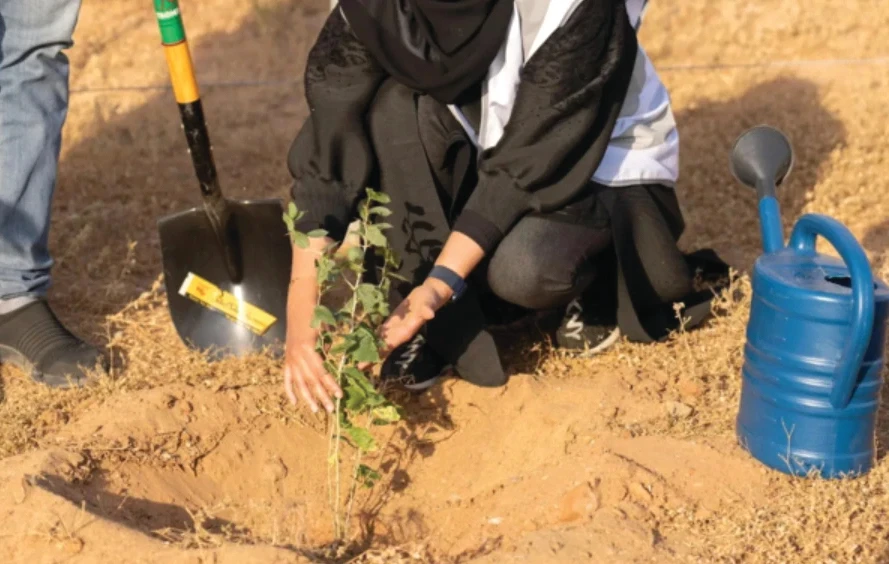
Al-Hagan said Princess Mashael spoke on the role of Saudi women in the development of science and technology, especially in the field of environmental protection in the Kingdom. Another topic of discussion was tele-education and its role in national development.
Besides the ministry, public sector organizations have also started encouraging Saudi women to engage in scientific research. In a pioneering move, the Saudi Basic Industries Corporation (SABIC) has set up a Prize for Environment named after Crown Prince Abdullah.
According to Ibrahim Alshuwaier, secretary-general of Prince Abdullah ibn Abdul Aziz International Prize for the Promotion of Scientific Research, the prize has been set up to reward both men and women who excel in the fields of applied environmental sciences.
The prize has been divided into three categories: Environmental protection and combating desertification; petrochemical, metal and plastic industries; water and agriculture technology. The winner in each category will be presented with a cash award of SR600,000, besides a commemorative medal and a citation. The last date for receiving entries is Feb. 28, 2005.
In a related development, King Abdul Aziz City of Science and Technology (KACST) has instituted a third category for the Al-Marai Prize for Scientific Excellence, exclusively for women researchers. The other categories, for best scientist and best innovative work, are open to both men and women.
Secretary-General of the King Khaled Charitable Foundation Princess Moodhy bint Khaled has also announced that the foundation will endow SR1 million annually to support post-graduate research studies by Saudi women. The amount will be given for a period of five years, specifically for scientific studies at the Research Center of the King Faisal Specialist Hospital in Riyadh. Last year, there were six Saudi women students enrolled at the center for the first time, four seeking doctorates and two working on master’s degrees.