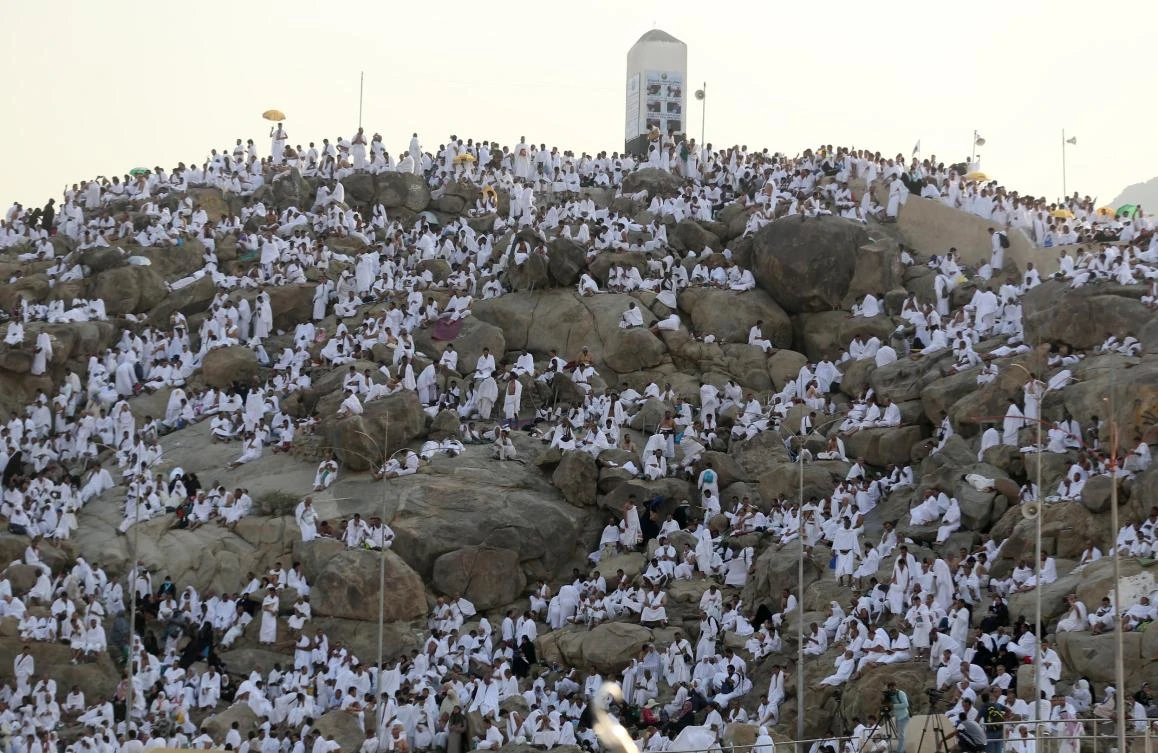
MINA, 22 January 2005 — A record number of pilgrims stoned the devil on the second consecutive day at the redesigned Jamrat area yesterday. The faithful were relieved at having performed the religious duty in relative comfort. The authorities heaved a sigh of relief since in the past the ritual was marked by tragedies.
The stoning targets were expanded and thousands of security forces were deployed in the area to control the crowd. This year, the authorities replaced the three pillars the pilgrims stone with thick walls providing a larger target to prevent the crush that normally occurs at the bridge.
Interior Ministry spokesman Brig. Mansour Al-Turki, however, cautioned that crowds on the Jamrat Bridge could reach “critical density” today, the third and final day for pilgrims to complete the stoning ritual. A record number of pilgrims — 2.56 million — performed Haj this year. According to Brig. Al-Turki, the number of domestic pilgrims was up significantly. “This year’s figure is more than half-a-million higher than last year or the previous high, 2.04 million pilgrims in 2003.” He said 112,000 more pilgrims than last year came from outside the Kingdom for this year’s pilgrimage, bringing the number from abroad to 1.534 million. Countries steadily have been filling or coming closer to filling their annual quotas, Brig. Al-Turki was quoted as saying.
The pilgrims began arriving in small groups before Friday prayers. They were joined by packed crowds of the faithful following the prayers at Khaif Mosque, which is the center of activity in Mina. It is a stone’s throw from the Jamrat area.
The stoning of the devil is largely symbolic. However, a lot of pilgrims were seen venting their fury while performing the ritual yesterday. “I stoned the devil with all my might today. On Thursday, I was too weak having spent the day in standing at Arafat and sleeping out in the open in Muzdalifa... I couldn’t really mete out justice to this Satan... He needs to be stoned vigorously,” said Haitham Saadaddin from Egypt. Some pilgrims gave the ritual a political color saying they see in the devil those who are persecuting Muslims all over the world. “This is nothing but an act of catharsis,” said Saqr Muhammad Jalal of Egypt. “To me these pillars represent those world leaders who are either killing or are responsible for the genocide of my brethren in Palestine and Iraq,” he said.
“Though symbolic, this act should be perpetuated by the world against those ‘devils’ who are ruining the very fabric of coexistence and world peace. They should be stoned in the same way the devil is pelted with pebbles,” said Senegalese Markhtoon Maulla.
For Sudanese pilgrims, the stoning of the devil was actually getting rid of the devil within. “This is an act of self-purification,” said Sadiq Al-Haj from Khartoum. “By doing this, we are saying that from today on we have decided to live according to the principles of Islam... That we will not indulge in usury, that we will not harm others, that we will remain steadfast in the defense of Islam.”
“It symbolizes the triumph of good over evil,” Abdul Wali Sher Khan of Pakistan said. “There is a fight going on between the good and the bad. All over the world. For the moment, it looks as if the bad people with preconceived notions about Islam have an edge. But finally, peace will prevail and we will come out victorious. All the efforts of the ‘devil’ to put us down will go in vain, in the same way as the devil had failed to mislead Prophet Ibrahim,” said Khan.
“We were worried about the crowds, and we had heard some real horror stories, so we feel much better that we made it without any problem,” said Ahmad Sodikin of Indonesia. Egyptian teacher Ahmad Kamal El-Din, who had also performed last year’s Haj, praised the new arrangements. “I could walk and throw my pebbles. ... This year was much easier,” he said. “Today we performed it in a more relaxed mood. Improved security and other arrangements have really worked and made things easier,” he said.
“We know this whole ritual is symbolic, but it excites passion among the pilgrims. We saw many pilgrims frantically throwing rocks, hurling insults or their shoes at the pillars — all these demonstrate their deep disdain for the devil,” said Mufti Shakeel Ahmad from India.