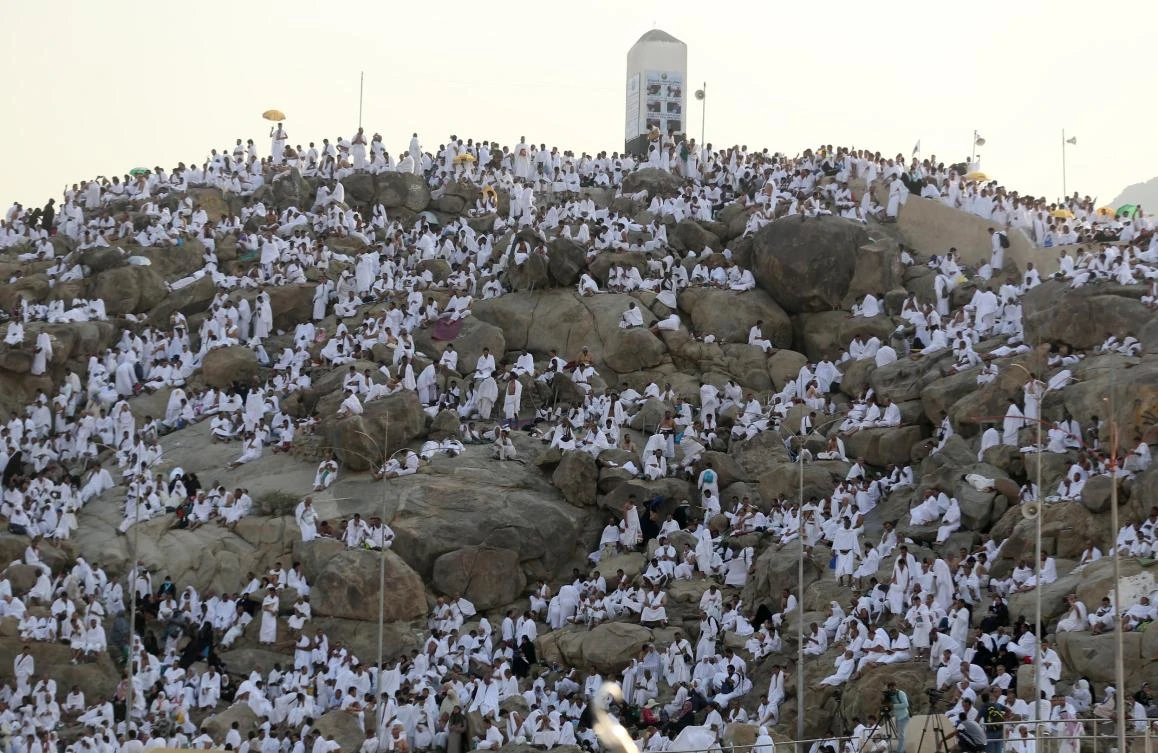
RIYADH, 24 January 2005 — After a number of pilgrims were trapped in Saturday’s flash floods in Mina, some Saudi academics and a number of pilgrims have urged the authorities to pay more attention to improving the drainage system in the holy sites in coming years as the Haj now falls in the winter season.
“The government will have to pay more attention to the drainage system, as we can expect rain again during next year’s Haj,” said Professor Khalid Saad ibn Saeed, editor of the King Saud University Journal. He also called for measures that would recycle rainwater for irrigation purposes.
Speaking to Arab News, Professor Khalid it was unfortunate that the government spent enormous sums of money on expanding Haj facilities, including those for treating contagious diseases and sunstroke.
At the same time, the government paid little attention to developing drainage facilities even though the Haj is now in the winter which, if there is one, is the rainy season, Professor Khalid said, adding that it had been warned of an impending problem almost five years ago
The general feeling is that the Saudi government spent billions of riyals to ensure the pilgrims’ safety, to track down overstayers after Haj, boost revenue from Haj traffic, to create jobs for Saudis in Makkah and to issue rules and regulations to the pilgrims. If expansion of the drainage network was not emphasized, it is understandable. Makkah and its surrounding area receive very little rainfall.
Nonetheless, Haj operators argue, the government never fails to take rain precautions for the large numbers attending Eid prayers all over the Kingdom. Why then did it fail to take sufficient precautions considering the possibility of rain when nearly three million pilgrims gathered in Mina this year, they asked.
According to Zakariya Bahadur, a Haj group organizer, the Saudi government should have paid more attention to this potential problem. Several Haj operators have urged the government to make the fire-proof tents water-resistant as well.
Speaking from Mina, an Indian pilgrim, said that pilgrims were accommodated in tents which were both water-proof and fire-proof. While the tents did not leak during Saturday’s rains, water was nonetheless a problem.
“There are drains which can take in the rain water but they are totally inadequate to cope with the huge surface runoff, especially when the water was streaming down from all sides of the hills. At the height of the downpour, we had to wade through two feet of water,” the Indian pilgrim said.
Another pilgrim observed that the ground inside the tents was not level and this prevented surface water from flowing into the drains. Blankets and mattresses were soon soaked through but action by civil defense personnel helped solve the problem.