
The documentary “Control Room” continues to gain more admiration and success as it shows the world the heavy bias and propaganda function of the media. “Control Room” broke all the rules when it introduced to the West, another version of the story they know only in a limited way. Filed as a “fly on the wall” documentary at Al-Jazeera Television, the film seeks to show the inner workings of a famous if sometimes controversial news channel.
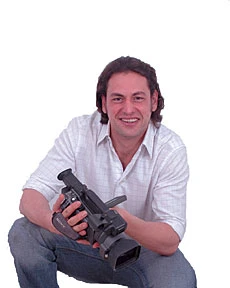
Hani Salama, the actor and producer of the documentary has a long relationship with the camera, which started when he was a child. There has not been a field of show business that he has not been involved in; there is more to come.
Salama Comes from a mixed background — Egyptian father and a Bosnian mother — and he believes that has helped him open a window to different cultures, accept differences, and relate to various issues.
Salama believes that media tends to work for governments and act as a megaphone for state authorities. The people therefore fail to get an accurate “big picture” of events.
“During the war in Bosnia, I saw people buying ten different newspapers to be able to get the full picture,” he said. Why, he asked do people in US get only one version of the news? Why are there CNN local and CNN international?
He quoted Samir Khadir when he spoke about the media propaganda, “History is written by the victors and people don’t want justifications.”
He explained that news is available 24 hours a day and because there is always something new, “there is no time to think, or time to explain.” Salama added that the Dalai Lama said that in order to solve the problems that people face, they have to talk; this is not happening.
Shooting the film in Al-Jazeera’s building was not an easy job for the film crew. They were restricted for a week at the guards’ office before being allowed to move to the cafeteria, where they were able to meet Al-Jazeera employees. “We spent so much time shooting the documentary,” Salama said. “We recorded 250 hours to make 86 minutes. Our crew was keen on getting the fullest possible picture of the media process.”
The documentary was received acclaim by audiences and the cinema industry. “Control Room” traveled the festival circuit and became famous at one in particular, the Sundance Festival for independent films. “More than one thousand independent films applied for this festival, but they only chose 16 films to be shown,” said Hani Salama.
The media, also, responded positively to this documentary. The film was broadcasted on TV channels all over the world. Salama said, “Michael Moore loved it and said it should get an Oscar.” Salama explained, the documentary was supposed to be in the Oscar Nominations, but a strict rule requires that the films nominated should not be broadcasted on any TV channel prior to the nomination.
Control Room was shown at the opening of Cairo Film Festival, then at the Dubai Film Festival.
Many cinema distributors regarded the film as a promotion for Al-Jazeera, a point that Salama did not agree with, “I believe that this film is trying to deliver a message, and inform people about media coverage and propaganda,” said Salama. Negotiations are still going on with various distributors.
The successful program “Bila Hudood” or (With out Borders) interviewed Salama along with the director Jehane Nouijaim for an hour and a half where they discussed their work and its challenges. After that interview, “many people from ambassadors to regular people on the street, told me how happy they were with the film,” he said.
Salama will be traveling between the US and Egypt as he starts working on a new documentary, “The Calling.”
“The Kinnley Group produces documentaries for PBS, HBO, and other Channels. They chose me to work as a segment director for this documentary,” Salama said.
“The Calling” is about five characters each of whom has a different religious background. There is a Muslim, a Christian, a Jew, and other characters. “I will be following the life of the Muslim character for a year and a half.”
Hani Salama has a rich career experience and has won many awards. He has worked as a model since he was 11 years old and won the title of Mr. Egypt in the year of 1997. He graduated with a bachelors degree in photo-journalism from the American University in Cairo and holds a masters degree in Music from Trinity College of Music in London. He has worked as an anchor for MBC channel and as a producer for CNBC Europe. He also worked as a cameraman for MTV, BBC, CBC among other channels.