JEDDAH, 3 February 2005 — Many Umrah pilgrims who decided to stay beyond their visas to perform the Haj are discovering that what may have sounded like a good idea at the time has left them stranded, living on the streets and begging to survive.
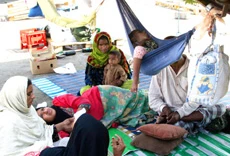
The entrances to Jeddah Islamic Port are crowded with hundreds of Haj and Umrah pilgrims without means to support themselves. Many arrived for Umrah with return tickets but have stayed on for Haj. Many are begging, hoping to raise cash enough to return to their home countries.
“We’ve been here since Ramadan,” said Ahmad, a Pakistani national. “Who can afford to come for Umrah and then go back only to return for Haj?”
Many pilgrims arrive as Umrah pilgrims, some three months before Haj and then overstay without means of living or accommodation.
Ahmad arrived for Umrah and decided to stay and perform Haj as well. Now his resources have run out, and he has been living off charity in the open for at least a month. “I wish that the consulate would do what is necessary so that we can return to our country,” he said.
Abid Osman, a middle-aged Asian here with his wife and children, told Arab News he washed cars and begged for a living to earn enough to buy tickets home. “We’ve been living on the sidewalk here and there from Ramadan through Haj,” said Osman. “It’s hard on the children, but what can I do?”
According to Al-Madinah newspaper, the 3,000 pilgrims crowded at the port are all Umrah overstayers. They flock to the port after hearing about ships departing for their home countries, but they soon discover that the ships sail on a set schedule, and reservations are booked through Saudi authorities and authorities in other countries.
An official source at the port said the crowds of Umrah overstayers who wait to perform Haj create a lot of problems as they gather at the port. He also said an extra effort would be made and extra trips planned to transport the overstayers back to their countries.
Umrah companies face an SR3,000 fine for overstayers/violators if they don’t notify the authorities during the first 24 hours of the people going missing.
Tariq Ahmad, an Umrah tour operator, said the number of such cases is estimated to be about 20 percent of the clientele. Umrah pilgrims must be out of the country on their way home by the Shawwal 15 deadline.
“Every Umrah company is fined SR100 per runaway pilgrim found living out in the open,” he told Arab News, noting that the new system had reduced the number of Umrah pilgrims staying for Haj.
Most of the problems authorities now face are in plane reservations and pilgrims who have lost their tickets.
“I’ve been here with my uncle and aunt and cousins since before Ramadan,” said Zahra Imran. She and her family left the Umrah company with which they came because they wanted to stay for Haj.
“It isn’t as easy as we thought,” Zahra said. “I’m ashamed to say that I’ve done some begging at times because my uncle is really too old to do any manual labor.”
Most of the begging Zahra’s family has done has been around mosques. “Now I just want to get home as soon as possible,” she said.
For some of the older pilgrims, overstaying can put their lives at risk. “I always used to worry that I’d die before ever coming for Umrah or Haj,” said Fatima, an elderly Asian pilgrim. Over the months since Umrah and throughout Haj her health deteriorated because of the living conditions. “May Allah return us to our home safely and quickly,” she said.