
RIYADH, 9 March 2005 — The International Media Production Zone (IMPZ) is setting up in Dubai Media City (DMC) what promises to be the world’s largest printing press spread over 10 million sq.ft and costing an estimated SR8 billion.
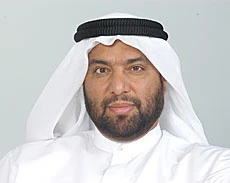
This was disclosed to Arab News by Mohammed Binghalib, director, IMPZ, who said some major Saudi newspapers are either relocating to their facility in DMC or are in serious discussions. “Some large printing presses would also like to send young Saudis for training in printing technology, since printing as a profession has been reserved for Saudis under the Kingdom’s Saudization program,” he said on the occasion of the Saudi industrial exhibition that opened at the Riyadh Exhibition Center on Monday.
Binghalib said that besides Saudi journals and printing presses, newspapers and magazines from India, Pakistan, the UAE and other Gulf states have decided to shift to IMPZ in Dubai Media City. “As many as 32 organizations have signed contracts with us,” he said, adding that the plan calls for setting up 70 printing presses in the IMPZ complex involving an average investment of SR50 million-70 million on each press.
The idea to set up IMPZ, he pointed out, was inspired by the potentially huge printing and packaging market that exists in Iraq. They could also undertake large orders from the Gulf states that now rely on Singapore for its state-of-the-art printing technology.
Located on an area of over 43 million sq. ft of land, IMPZ seeks to create a cluster environment for media production companies from across the industry value chain to interact and collaborate productively.
While the infrastructure will support all sectors of the media and entertainment industry, the first production cluster will focus on the printing and publishing industry.
Binghalib pointed out that as with companies in Dubai Media City, those joining the Zone can have 100 percent ownership. They are exempted from a range of taxes including those for machinery, equipment, raw materials and spares utilized by the industry. Furthermore, rules governing media production have been simplified to provide companies in the zone tremendous ease of operations.
He said the Zone’s first production cluster focusing on the printing and publishing industry will provide world class infrastructure for print production and publishing activities. Apart from state-of-the-art communications and technology facilities, the zone will also offer land and pre-built printing, production and warehousing units.
High-quality thermally-insulated production units will be made available on annual rental basis. Each unit will be a complete facility for production operations with exits for loading and unloading raw materials and finished goods.
Printing companies will have the option of taking multiple units or having a combination of both land and production units. Companies joining the district will also have the choice of developing their own infrastructure.
Elaborating on Binghalib’s remarks, Dominic McGill, business development manager, said IMPZ will also be equipped to provide training facilities to Saudis and other nationals. To this end, training institutes will be set up within their complex.
Sinbad Mahaire, marketing manager (Middle East) of Heidelberg Middle East, said they have signed a contract with the General Organization for Technical Education and Vocational Training (GOTEVOT) for training young Saudis in printing technology at their facility. They were also looking after trainees from other printing establishments. Heidelberg, which has invested SR 5 million in the Kingdom, operates as a joint venture with Juffali company for executing large-scale printing orders.