
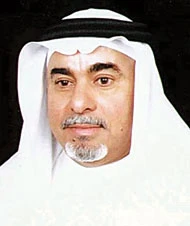
Saudi archaeologist Dr. Ahmad Al-Zeilei said that the Arabian Peninsula is full of historical ruins and buried cities with a history going back thousands of years. Al-Zeilei teaches at King Saud University in Riyadh and is the secretary general of the History and Ruins Association of the Gulf Cooperation Council (GCC) countries. He emphasized the importance of compiling a Jeddah encyclopedia covering the last 1500 years. He has also spoken about the reasons that have led to the burial of many early Islamic sites in both Makkah and Madinah.
Q: You head a scientific team which is producing a encyclopedia of Jeddah going back 1500 years. What do you hope to achieve?
A: We are doing scientifically documented work. We were a group of colleagues at King Abdul Aziz University who wanted to work on an accurate and historically documented encyclopedia for Jeddah. We were fortunate enough to meet a businessman, Muhammad Abbas Al-Sehli, who asked me to provide him with my vision of this encyclopedia. I submitted a proposal for 8 volumes: The first dealing with Jeddah's geography; the second with history; the third its traditional heritage and ruins; the fourth its culture; the fifth its communities; the sixth its general facilities; the seventh its business and economy and the eighth, its population.
Q: You'll be dealing with Jeddah's history since starting from 1400 years ago when it was chosen by the Caliph, Othman ibn Affan to be the gateway to Makkah. Won't this be terribly difficult?
A: From the historical aspect, Jeddah's fragmented history is a bit scarce as far as the sources we've gotten our hands on. Then again, this is our job; we're tracing different things from different periods in history that exist in the oldest books. We'll coordinate between the different findings with a single work in which a reader will find answers to many of his questions. As for the city, when it comes to historical ruins, there is a lot beneath it but it would be very difficult to dig for the old ruins with all of the new construction from the last few years.
Q: You'll be using photographs in the encyclopedia. Where will they come from?
A: It's well known that there are pictures in the books of western travelers from the days of the Ottoman Empire. There are also pictures from official delegations or those who came to Jeddah to study or to perform Haj. We're trying to collect the largest possible number of rare pictures from different parts of the world.
Q: Not much, it seems, is known about the history of the Arabian Peninsula. In fact not much except for a little about Mada'en Saleh and Al-Akhdoud in Najran.
A: That's true. Mada'en Saleh and Al-Akhdoud are known because they are prominent and easily visible to visitors. They are not ruins buried underneath the sands of the Empty Quarter. There are, however, a number of underground sites and ruins in the Kingdom. One of the most important is an entire buried village called Al-Fau which is 700 km south of Riyadh. The village was the capital of a state called Kanda which existed in pre-Islamic times. The ruins indicate human habitation going back thousands of years.
Q: What are some of the features of Al-Fau?
A: The ruins tell us a good deal about the people's lifestyle. There are houses, markets, storage facilities and temples. Some of the houses are large and suggest wealth while others are small and suggest poverty. The site also includes cemeteries and irrigation canals.
Q: What about other ruins?
A: There is 'Taima'a' which is among the well-known capitals of Wadi Al-Qura. It needs a lot of work and money to bring it up to surface.
Q: What about Islamic ruins?
A: Construction has eliminated a number of historical buildings and ruins. In Makkah there are buildings that can go back further than the Ottoman Empire but I'm not sure about Madinah. Of course there are sites that have been intentionally eliminated in order to avoid them being shrines where people might wrongly worship.