MANAMA, 26 July 2005 — Top US naval commanders operating in the Arabian Gulf said they were not ruling out the possibility of terrorist maritime attacks against the coalition forces or other commercial installations in the area following the recent attacks on London and Sharm El-Sheikh.
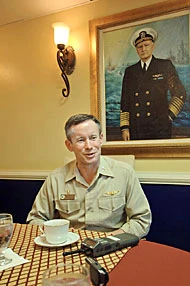
Commander of Carrier Air Wing Eleven, Capt. Thomas Cooper, currently deployed aboard the nuclear-powered aircraft carrier USS Nimitz said the coalition forces were aware of the threat posed by global terrorist organizations.
“Terrorists have the capability to adapt, change their tactics, and even change their targets,” he told reporters on board the USS Nimitz on Saturday.
“There is always the possibility that one of the many dhows that roam the sea might mean harm to the coalition presence here and we are mindful of that”
Capt. Cooper also said that the coalition was trying to stay one step ahead of the terrorists by trying to anticipate some of these targets and defend them adding that they were taking protective measures to prevent such attacks.
The fight against terrorists, according to Capt. Cooper, is hard because they are very loosely organized stateless elements without readily identifiable command and control centers and operate as small groups.
“Without having some intelligence about their plans it’s hard to intervene,” he said.
Cooper, who emphasized the need for stronger global cooperation to fight terrorism, added that the coalition presence had served as a deterrent to terrorists from carrying out attacks in the maritime environment.
Rear Adm. Peter H. Daly, Commander of Carrier Strike Group Eleven said that their mission was a two-fold one.
“A significant part of the strike group is involved in supporting the operations in Iraq by supporting the troops on the ground with surveillance and airborne artillery if needed,” he said. “At sea our biggest mission is maritime security operations. We are here to work with other coalition and Gulf Cooperation Countries to make sure that this region enjoys maritime security.