JEDDAH, 2 August 2005 — Saudi Arabia has always been identified with its monarch. Like his predecessors, King Fahd’s first concern had been to ensure the stability and security of the Kingdom. The responsibility was of paramount importance, given Saudi Arabia’s leading role as the cradle of Islam and home to Islam’s two holiest shrines — the Grand Mosque in Makkah and the Prophet’s Mosque in Madinah. The Kingdom’s position as the world’s largest oil producer gave it the clout as the richest nation in the region and the largest donor to Muslim and other developing countries.
King Fahd’s contribution to the development and modernization of the Kingdom goes back years — long before he assumed the leadership of the Kingdom as the fourth monarch in June 1982. His emphasis had always been on the development of the country’s human resources. The objective was to enable all Saudis to contribute to their nation’s growth and progress.
When more than 40 years ago King Fahd became the Kingdom’s first education minister, there was only one high school in the Kingdom and the total number of Saudis attending all levels of education was just 30,000. As minister of education he laid the foundation of a nationwide school system. Today, more than four million students are enrolled in thousands of schools and scores of universities.
As it progressed over the years, Saudi Arabia continued to face a host of challenges posed by the emergence of new economic, financial and political realities. It had to adapt to both domestic and international transformations.
When he became crown prince in 1975, King Fahd assumed an increasingly active role in both domestic and international affairs. Internally, he set forth the goals of the country’s development: “The Kingdom, through continuous work on the part of the government and through understanding and cohesion on the part of the citizens, undertakes to surmount all difficulties of whatever nature to attain, if God so wills, a prosperous society, a society well balanced economically, culturally and intellectually, and one based upon the teachings and spiritual values of Islam.”
His words to his people when he was proclaimed king in 1982 were: “I will be the father to the young, brother to the elderly. I am but one of you; whatever troubles you, troubles me; whatever pleases you, pleases me.”
A series of measures aimed at revitalizing and streamlining the political and administrative system were to follow. Ten years after taking over, King Fahd introduced the new Basic Law for the System of Government. The system outlined the government’s objectives and responsibilities and defined the relationship between the ruler and the citizens. At the same time, he restructured Majlis Al-Shoura (Consultative Council) that was first introduced by his father and founder of modern Saudi Arabia, King Abdul Aziz ibn Abdul Rahman Al-Saud. The Majlis was transformed into a more formalized and efficient body starting with 60 members that was later increased to 150. At the same time, new bylaws for the Provincial System were announced with the aim of raising the efficiency of administration of the Kingdom’s 13 provinces and promote their continued development.
On the economic side, King Fahd initiated a major drive that opened up the Kingdom’s economy through a series of privatization measures aimed at attracting investment and giving the private sector a more leading role. The wisdom behind this policy was to gradually loosen the state’s control and spare the Kingdom whose economy depends heavily on oil the shocks caused by fluctuations in oil prices.
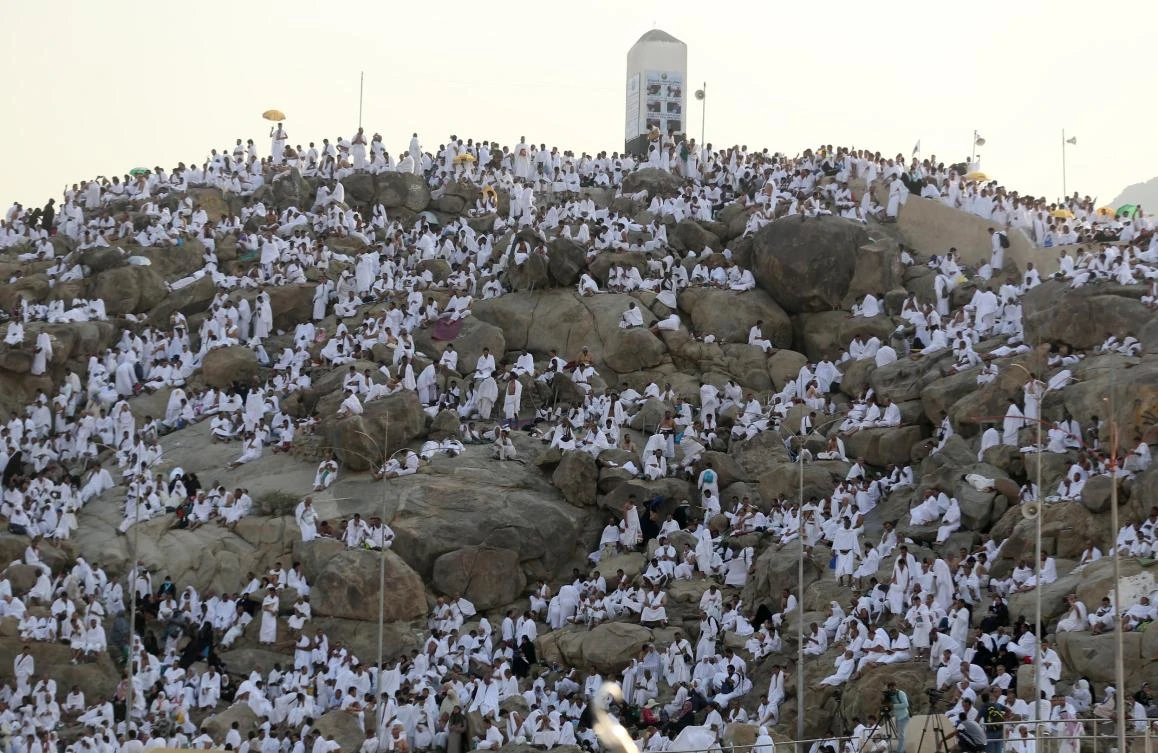
King Fahd was as committed to the cause of Islam and Muslims as he was dedicated to the service of his nation. Substituting the title of “His Majesty” with that of the “Custodian of the Two Holy Mosques”, he personally supervised a series of massive projects aimed at facilitating the annual pilgrimage to Makkah for the millions of Muslims who converge on the Kingdom each year for Haj and Umrah (minor pilgrimage). The largest expansion of the Grand Mosque and the Prophet’s Mosque ever undertaken in the history of Islam took place during his reign. He once said of serving Islam and Muslims: “This is a great responsibility which we are honored to bear and we must always be equal to the task.”
King Fahd was an effective player on the international diplomatic scene, for he was introduced to the world of diplomacy at a young age. He demonstrated, while still crown prince, a personal interest in seeking an end to the Arab-Israeli conflict. He proposed an eight-point peace plan that was later unanimously adopted by Arab leaders to form the basis for a settlement of the Middle East dispute.
Another major concern for him was the Lebanese civil war. He managed to bring the entire members of the Lebanese Parliament to the Kingdom’s resort city of Taif in 1989. The peace talks eventually led to the end of the civil war after the Lebanese deputies agreed on political reform and the election of a new president.
King Fahd’s commitment to the stability of the Gulf region was demonstrated in what came to be known as the Gulf War I, when Iraqi forces invaded and occupied neighboring Kuwait in August 1990.
Kuwait, a member of the six-nation Gulf Cooperation Council, was the victim of naked aggression. When the region was faced with the most serious foreign policy and security crisis in its history, King Fahd realized that only force could end the Iraqi occupation. Within a few months, King Fahd who had always been a man of peace, managed to assemble the largest international coalition involving Arab, Islamic, Western and other forces to enforce the UN Security Council resolutions and ensure the liberation of Kuwait, which followed six month after the invasion.
King Fahd will be remembered by his people and the rest of the world as the leader who embodied the dynamic future of Saudi Arabia, and the ruler who refused to sacrifice the Kingdom’s Islamic values for materialistic gains.