YEI, Sudan, 6 August 2005 — Uganda’s President Yoweri Museveni said yesterday the helicopter crash that killed Sudanese First Vice President John Garang may not have been an accident, dropping a bombshell on thousands morning the death of the ex-rebel leader in south Sudan.
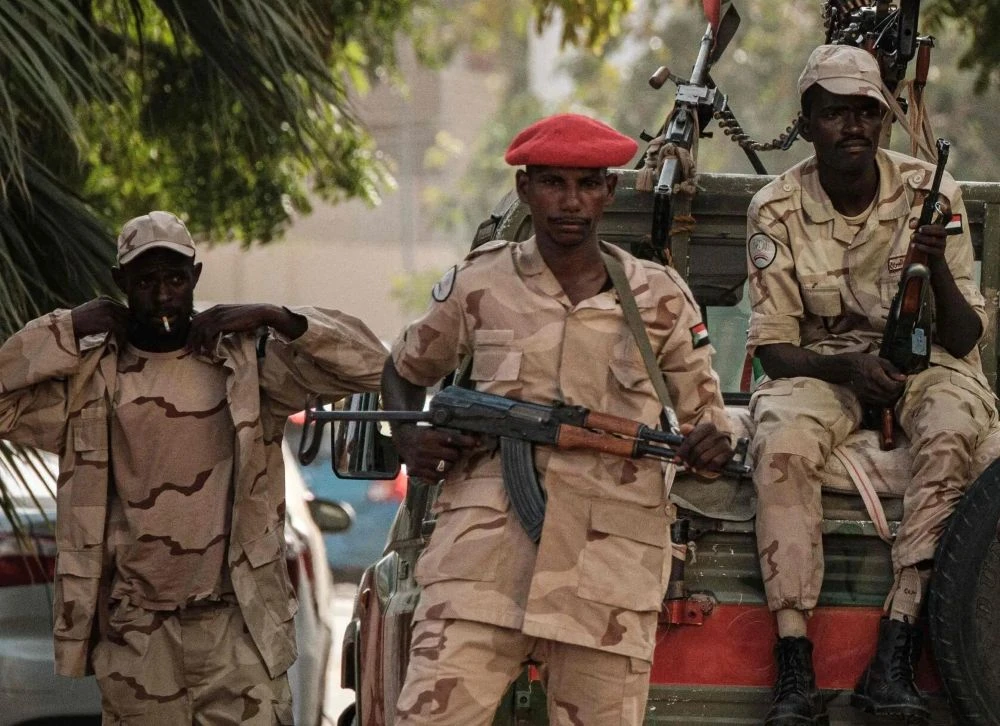
Thousands of Sudanese government troops and ex-rebel fighters were deployed meanwhile in the south’s main town Juba amid high tensions on the eve of Garang’s funeral.
“Some people say accident, it may be an accident, it may be something else,” Museveni said, becoming the first official of any government to publicly suggest Saturday’s crash may have been the result of foul play.
“The (helicopter) was very well equipped, this was my (helicopter) the one I am flying all the time, I am not ruling anything out,” he said, noting an international panel of experts had been appointed to look into the crash.
“Either the pilot panicked... either there was some side wind or the instruments failed or there was an external factor,” Museveni told mourners in Yei where Garang’s body was brought ahead of his funeral in Juba today.
His comments were met with stony silence from the crowd, which had earlier greeted the arrival of Garang’s coffin with wailing, ululation and prayer.
Garang’s successor as chief of the Sudan People’s Liberation Movement Army (SPLM-A), Salva Kiir, declined to comment on the specifics of Museveni’s remarks but said the group was eager to hear the results of the probe.
“All options are open and cannot be ruled out,” Kiir told reporters after calling on mourners to reject the violence that has engulfed parts of Sudan since Garang’s death and urging them to hold to their ex-leader’s vision for peace.
“Let us follow the footsteps of our leader,” he told the crowd. “This is not the time for rioting,” Kiir said, blaming unspecified opponents of peace for wanting “to provoke a situation that would lead us back to war.”
In Khartoum and Juba, senior SPLM-A officials cautioned against making any assumptions about the cause of the crash as did a diplomat in Bor, Garang’s birthplace where his coffin was brought after Yei. “We don’t have anything to suggest it was caused by sabotage,” SPLM-A spokesman Pagan Amun said in Khartoum.
In Juba, SPLM-A Gen. Pieng Deng told reporters that the flight data recorder from the helicopter had been recovered at the crash site. “Up to now we believe it is an accident but let the investigation end... as leaders, we cannot say anything until the investigation is concluded.”
In Bor, the diplomat said Museveni’s remarks on the eve of the funeral were unfortunate and noted that the Ugandan leader “is under personal pressure because it was his own helicopter.” Garang and 13 others died when Museveni’s presidential Mi-172 helicopter went down in the mountains of southern Sudan, sparking days of violence in Khartoum and the south that saw 130 killed and hundreds wounded.
His death and the rioting raised fears of the unraveling of the landmark January peace deal he signed with Khartoum that ended Sudan’s 21-year north-south civil war.
However, relative calm returned to the streets of Khartoum yesterday as shop-owners reopened for business amid a noticeably lower security presence.
Many southerners believe Garang was somehow assassinated and have refused to believe the initial insistence of Ugandan, Sudanese and other officials that the helicopter went down because of poor weather.
Museveni did not elaborate on what he meant by “external factor” but there has been widespread speculation in southern Sudan that the chopper may have been somehow sabotaged or shot down.
In a bid to quell the speculation and restore calm, Sudanese President Omar Bashir has launched a formal probe that Museveni said would be joined by aviation experts from Uganda, Kenya, the United States, Britain and Russia.
As preparations for the massive send-off continued, two planeloads of heavily armed Sudanese soldiers, including members of the elite presidential guard, landed and immediately spread throughout the town.
Thousands of southern Sudanese descended on a former military training ground in Juba to help prepare Garang’s burial site ahead of his funeral on Saturday that is expected to draw some 500,000 people.
Weeping women, stoic men and curious children converged on the site near the state Parliament where frantic construction was under way on a mausoleum to hold Garang’s remains. In accordance with Dinka tribal tradition, one of Garang’s sons, Chol, a 25-year-old fine arts student in Britain, dug up the first chunk of earth where his father will be laid to rest. “Sometimes I wake up and find people weeping,” Chol said. “I never thought I would be digging my father’s grave.”
Southern Sudanese tribal and church leaders joined in prayer with a northern Muslim family yesterday to mourn the loss of their son, killed by rioters during three days of the capital’s worst clashes in years. Drowned out by the wails of female relatives, southern church leaders led prayers for Abdel Aziz Hassan Saeed.