
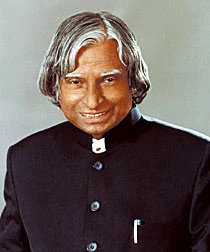
My Dear Citizens of India,
On the eve of the 59th Independence Day, I extend to you my best wishes for your happiness and prosperity. My greetings to all our people at home and abroad. Let us resolve, on this occasion, to remember with gratitude, the selfless and devoted services of our Armed Forces who are guarding our frontiers on the land, over the sea, and in the air. We are also grateful to the paramilitary and police forces for preserving our internal security and maintaining law and order.
I met 137 freedom fighters from 27 states and union territories on Aug. 9 at Rashtrapati Bhavan. I saw their enthusiasm even at their ripe age, to bring back the nationalism as a living movement. Today our country is free, because the freedom fighters gave their best to the nation in their prime of youth. Honoring the freedom fighters is honoring the independent nation and its spirit of nationalism. We must thank them with respect and make their lives happy.
Nature’s Fury and Its Management
While we are celebrating 59th anniversary of our hard earned political independence, we have to remember the sufferings of our people affected by the recent rain and flood in Maharashtra, Gujarat, Madhya Pradesh, Himachal Pradesh, Karnataka and Orissa. The city of Bombay and other areas in Maharashtra bore the brunt of nature’s fury. The people of these areas are meeting the challenge with courage and fortitude. The prime minister had visited some of the affected areas. I spoke to the chief minister of Maharashtra while he was visiting various places affected by the floods and I also shared my concern with other chief ministers. Maharashtra needs help at this critical juncture to mitigate the sufferings arising out of loss of life and properties inflicted by the fury of rain and flood. All the states need to express their solidarity with the people of Maharashtra in their time of distress and suffering, and collectively help in removing the pain of the people. Mumbai needs an urgent reconstruction to face unexpected heavy rain, as it happened this year.
Rainfall and Floods: Rainfall and floods are annual features in many parts of the country. Instead of thinking on interlinking of rivers only at times of flood and drought, it is time that we implement this program with a great sense of urgency. We need to make an effort to overcome various hurdles in our way to the implementation of this major project. I feel that it has the promise of freeing the country from the endless cycle of floods and droughts.
Earthquake Forecasting: Another natural phenomenon that affects and causes damages of high magnitude without pre-warning in many parts of our country is the earthquake. To prevent heavy damage to the people and property, we need to accelerate research for forecasting earthquakes.
Earth Systems Science: Many of the countries in the world have experienced successive calamities driven by the nature. Till recently, the researchers world over had been pursuing research in unconnected ways, in climate, earthquake, ocean sciences and earth sciences, without realizing the latent but tight coupling between these areas. This new realization has prompted many countries to pursue the interdisciplinary area of research which is now known as Earth Systems Science. It is in fact fast emerging as an area of convergence between earth, climate, ocean, environment, instrumentation and computer sciences. I strongly suggest that India should mount a program in this emerging area of Earth Systems Science. This will call for a dedicated, cohesive and seamless integration between researchers in multiple areas and in multiple organizations. Further, Earth Systems Science doesn’t obey political or geographical borders. It is truly a science and its intensive results would make our planet safe and prosperous. Dear citizens, on Jan. 26 2005, I have discussed with you on the potential for employment generation in eight areas. I am happy that a number of actions are evolving.
Energy Independence
Today on this 59th Independence Day, I would like to discuss with all of you another important area that is “Energy Security” as a transition to total “Energy Independence”. Energy is the lifeline of modern societies. But today, India has 17 percent of the world’s population, and just 0.8 percent of the world’s known oil and natural gas resources. We might expand the use of our coal reserves for some time and that too at a cost and with environmental challenges.
Energy security rests on two principles. The first, to use the least amount of energy to provide services and cut down energy losses. The second, to secure access to all sources of energy including coal, oil and gas supplies worldwide, till the end of the fossil fuel era which is fast approaching. Simultaneously we should access technologies to provide a diverse supply of reliable, affordable and environmentally sustainable energy.
As you all know, our annual requirement of oil is 114 million tons. Significant part of this is consumed in the transportation sector. We produce only about 25 percent of our total requirement.
The presently known resources and future exploration of oil and gas may give mixed results. The import cost today of oil and natural gas is over Rs.120,000 crores. Oil and gas prices are escalating; the barrel cost of oil has doubled within a year. This situation has to be combated.
Energy security, which means ensuring that our country can supply lifeline energy to all its citizens, at affordable costs at all times, is thus a very important and significant need and is an essential step forward. But it must be considered as a transition strategy, to enable us to achieve our real goal that is — Energy Independence or an economy which will function well with total freedom from oil, gas or coal imports. Is it possible?
Hence, Energy Independence has to be our nation’s first and highest priority. We must be determined to achieve this within the next 25 years i.e. by the year 2030.
Now friends, I would now like to discuss with you some goals, strategies and policies for a major national mission to attain Energy Independence.
Electric Power Generation Sector:
Electric power generation in India now accesses four basic energy sources: Fossil fuels such as oil, natural gas and coal; Hydroelectricity; Nuclear power; and Renewable energy sources such as bio-fuels, solar, biomass, wind and ocean.
Fortunately for us, 89 percent of energy used for power generation today is indigenous, from coal (56 percent), hydroelectricity (25 percent), nuclear power (3 percent) and Renewable (5 percent). Solar energy segment contributes just 0.2 percent of our energy production.
Energy Independence in
Electric Power Generation:
Thus it would be seen that only 11 percent of electric power generation is dependent on oil and natural gas which is mostly imported at enormous cost. Only 1 percent of oil is (about 2-3 million tons of oil) being used every year for producing electricity. However, power generation to the extent of 10 percent is dependent on high cost gas supplies. We are making efforts to access natural gas from other countries.
Now I shall discuss another fossil fuel, coal. Even though India has abundant quantities of coal, it is constrained to regional locations, high ash content, affecting the thermal efficiency of our power plants, and also there are environmental concerns. Thus, a movement toward Energy Independence would demand accelerated work in operationalizing the production of energy from the coal sector through integrated gasification and combined cycle route. In 2030, the total energy requirement would be 400,000 MW.
Nuclear Energy
Nuclear power generation has been given a thrust by the use of uranium based fuel. However there would be a requirement for a tenfold increase in nuclear power generation even to attain a reasonable degree of energy self-sufficiency for our country. Therefore it is essential to pursue the development of nuclear power using Thorium, reserves of which are higher in the country. Technology development has to be accelerated for Thorium based reactors since the raw material for Thorium is abundantly available in our country. Also, nuclear fusion research needs to be progressed with international cooperation to keep that option for meeting the large power requirement, at a time when fossil fuels get depleted.
Power System Loss Reduction
Apart from generating power and running power stations efficiently without interruption, it is equally essential to transmit and distribute the power with minimum loss. The loss of power in transmission and distribution in our country is currently in the region of 30-40 percent for a variety of reasons. Of about one thousand billion units of electrical energy produced annually, only 600 billion units reach the consumer.
This is the result of transmission loss and unaccounted loss. We need to take urgent action to bring down this loss to 15 percent from 30-40 percent by close monitoring of the losses, improving efficiency, and increasing the power factor through modern technology. By this one action alone we will be able to avoid the need for additional investment of around Rs. 70,000 crores for establishing additional generating capacity.
Use of Biofuels:
We have nearly 60 million hectares of wasteland, of which 30 million hectares are available for energy plantations like “Jatropha”. Once grown, the crop has a life of 50 years. Each acre will produce about two tons of bio-diesel at about Rs. 20 per liter. Biodiesel is carbon neutral and many valuable by-products flow from this agro-industry. Intensive research is needed to burn bio-fuel in internal combustion engines with high efficiency, and this needs to be a urgent R&D program. India has a potential to produce nearly 60 million tons of bio-fuel annually, thus making a significant and important contribution to the goal of Energy Independence.
The other critical options are development of electric vehicles; hydrogen based vehicles, electrification of railways and urban mass transportation.
Conclusion
By 2020 the nation should achieve comprehensive energy security through enhancement of our oil and gas exploration and production worldwide. By the year 2030, India should achieve energy independence through solar power and other forms of renewable energy; maximize the utilization of hydro and nuclear power and enhance the bio-fuel production through large-scale energy plantations like Jatropha.
We need to evolve a comprehensive renewable energy policy for energy independence within a year. This should address all issues relating to generation of energy through wind, solar, geothermal, bio-mass and ocean.
The nation should also work toward establishment of Thorium-based reactors. Research and technology development of Thorium-based reactors is one of the immediate requirements for realizing self-reliance in nuclear power generation and long-term energy security for the nation.
We should operationalize a 500 MW capacity power plant using integrated gasification and combined cycle route within the next three years from the existing pilot plant stage.
Bio-fuel research should be extended in collaboration with R&D laboratories, academic institutions and automobile industry to make it a “full fledged fuel” for the fleet running in the country in a time bound manner. This should lead to a mission mode integrated program encompassing various ministries and industries. Also there is a need to formulate a comprehensive bio-fuel policy from research, development, production to marketing.
Energy security leading to energy independence is certainly possible and is within the capability of the nation. India has knowledge, natural resources; what we need is planned integrated missions to achieve the target in a time bound manner. Let us all work for self-sufficient environment friendly energy independence for the nation.
JAI HIND.
May God Bless you all.
A.P.J Abdul Kalam
President of India