JEDDAH, 11 October 2005 — For viewers in Saudi Arabia, the television news scenes of the recent earthquake in Pakistan are disturbing. For the expatriate workers, however, who are hearing reports about their homes and families, the experience can only be described as a nightmare of fear, uncertainty and helplessness.
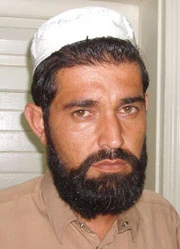
Muhammad Naseem can neither cry nor speak in a coherent manner. His friends do most of the talking, narrating the broad details of the tragedy as Naseem nods occasionally in affirmation.
“I really don’t know what has happened to my family,” said Naseem, a 40-year-old husband and father of four. “I got a call from my father in Batgram district of Pakistan’s Northwest Frontier Province five hours after the killer quake flattened my district of 1,000 people on Saturday morning. ‘Come home immediately,’ he told me. That was it,” he said.
Naseem, a driver for Sharbatly Cold Stores’ Khamis Mushayt branch, switched on a television for updates from Pakistan. He was horrified by the images being played on Pakistani TV stations. “I went numb,” he said.
Attempts to call his father back and to reach other relatives in his hometown have been futile. “There has been absolutely no response. Every number that I had in the town is not reachable,” he said. “The next thing I did was to put on my ‘ihraam’ (two pieces of seamless cloth) and go to Makkah to perform Umrah. That was the only decision I could make,” he said. “Then I came to Jeddah to the company’s headquarters to complete the exit/re-entry formalities.”
Friends have heard that Naseem’s 15-year-old son, his eldest, was killed in the quake; Naseem is still in a state of shock. “This is what they are saying,” he said. “Unless and until I see it for myself, I won’t believe anything. I am confused. I don’t know anything. I just want to go home; I just want to go home; I just want to go home.”
He also has heard that his 70-year-old father, Juma Khan, is in hospital. “Maybe he made that one and only call to me from his hospital bed,” Naseem speculated.
Batgram, a subdistrict near Abbotabad, is some five hours’ drive from the Pakistani capital of Islamabad.
Before coming to Saudi Arabia, Naseem shuttled passengers in his own vehicle from Islamabad to his hometown. Agriculture — growing wheat and barley — provides a livelihood for the residents of the district.
“I last saw my four children when I went on vacation 18 months ago,” he said. “We were a happy family, and I was proud of working in Saudi Arabia so my children could have a better future. I go home every two years, and I would have gone home in another six months.”
Some close friends have taken him to the Pakistani Consulate in Jeddah for help. “I don’t read newspapers, and I didn’t know that the consulate had opened a helpline. How do we know? We are poor people,” said Naseem.
As papers are obtained and travel arrangements are made, no matter how quickly it is expedited, time is standing still for Naseem. “I just want to grow wings; I want to fly home,” he said. “I want to see what has happened to my mother, my wife, my children and my uncles.”