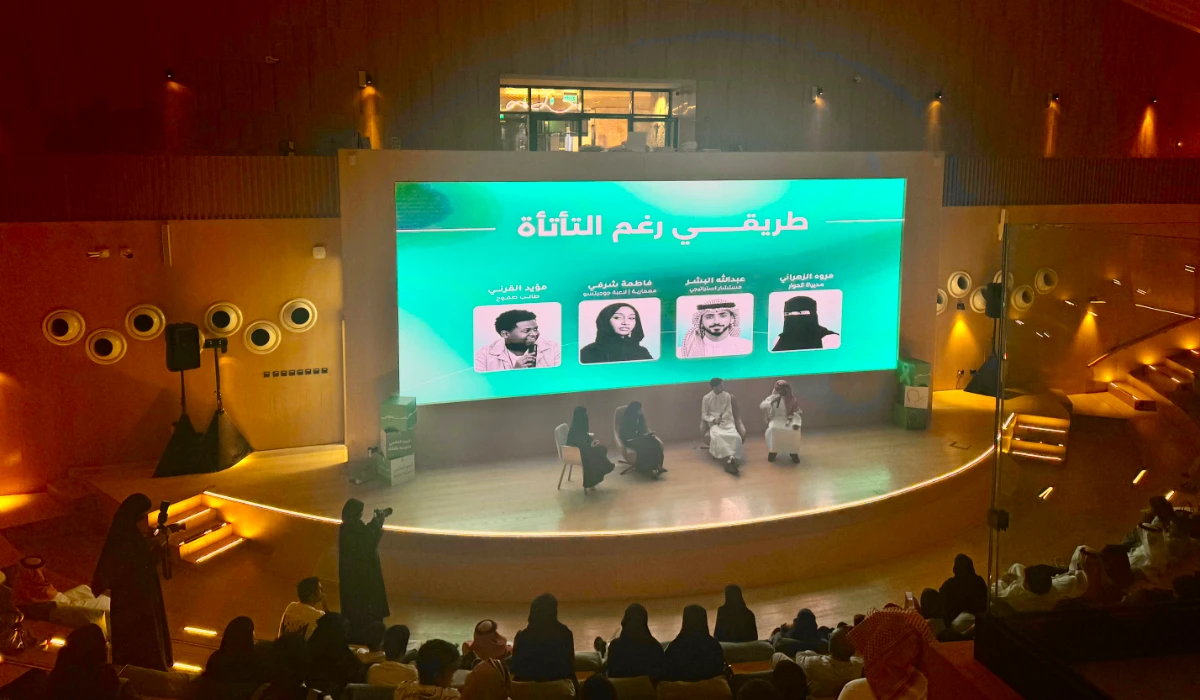
JEDDAH, 19 August 2006 — More than 1,500 scientists, academics and experts from within and outside Saudi Arabia will take part in a regional scientific conference for the giftedness to be opened here on Aug. 26. Some 80 brilliant girls and boys of the Prince Abdul Majeed Center for the Gifted will also attend the conference. The event is taking place with the support of Custodian of the Two Holy Mosques King Abdullah.
Organized by the King Abdul Aziz & His Companions Foundation for the Gifted, the conference aims at developing various professional, scientific and cultural procedures in the field of nurturing gifted students for the benefit of parents and specialists.
It also aims at developing concepts related to giftedness and creativity.
Objectives of the five-day event include: developing methods to identify the gifted; promoting critical and creative thinking skills; developing methods of nurturing gifted students with special needs and handicaps; identifying personal, social and emotional needs of the gifted; and activating the role of governmental and private institutions in nurturing gifted individuals. Scientists and experts of international fame are expected to take part in the conference titled “Nurturing Giftedness ... the Grounding of Bright Future.”
They include Abdullah Al-Rabeeah, chief executive officer of National Guard Health and president of King Saud ibn Abdul Aziz University for Health Sciences; Robert H. Rines, who holds more than 60 patents; Tracy Cross, a distinguished professor of gifted studies and former executive director of the Indiana Academy for Science, Mathematics, and Humanities; and George Betts, director of the Center for the Education and Study of the Gifted, Talented and Creative, University of Northern Colorado.
Other key speakers are: Taisir Subhi-Yamin, associate professor of gifted education and e-learning at the Arabian Gulf University in Bahrain; Jiannong Shi, director of the Center for Supernormal Children and the Center of Human Development and Education at the Institute of Psychology, Chinese Academy of Sciences; Janchai Yingprayoon, president of International Council of Associations for Science Education (ICASE) and assistant director of Institute for the Promotion of Teaching Science and Technology in Thailand; Hwan Kim, director, Kim Institute for the Korean Gifted; Farag Moussa, honorary president of the International Federation of Inventors’ Association in Geneva.
There will be workshops for gifted students to learn some strategies for the development of creative abilities. Some other workshops target teachers and coordinators of gifted programs to be trained on some curricular programs in developing creative behavior in gifted students.
A third type of workshops target teachers and coordinators of various content-area subjects to be trained on vital strategies for thinking skills development and individualized teaching.
Elham Harasani, director of Prince Abdul Majeed Center for the Gifted Children, commended the role of King Abdul Aziz Foundation in promoting the capabilities of students and individuals having extraordinary skills.
“The foundation plays a pioneering role in disseminating a culture of giftedness and creativity in the Arab region and strengthening contacts between scientists and experts in the field,” she said. Speaking about the participation of her students in the conference, Harasani said Abdul Mohsen Al-Hawari, who is visually impaired, would present his experiments in front of international experts.