JEDDAH, 23 October 2006 — A number of sheikhs across Jeddah have raised concerns about the practice of people distributing Zakah Al-Fitr by giving it to people who do not deserve it — those who sit in front of shops and sell rice for Zakah Al-Fitr.
According to the sheikhs, these same people then resell the Zakah Al-Fitr to the rice-sellers at a cheaper rate, something that is against the correct understanding of the Qur’an and Sunnah.
The sheikhs have emphasized the need for authorities to monitor the process of distributing Zakah Al-Fitr by carrying out random checks across the city and stop stalls that spring up to sell rice at the end of Ramadan.
“We also need to spread awareness among residents about the importance of offering Zakah Al-Fitr to those who deserve it or to concerned charities,” said one sheikh.
On this note, a number of charities, including the Charity Warehouse, have prepared groups of Saudi youth to sit at different commercial locations and public areas. These young men also tour working locations in government and private administrations to offer SR10 coupons — which is the amount of Zakah according to Shariah. Consequently, the money from these coupons is collected through these charities and then handed over to those who are in need and are enlisted on their lists.
Makkah Governor Prince Abdul Majeed approved the plan/program of delivering Zakah to those who deserve it as carried out by the Charity Warehouse that offers aid to 4,000 poor families. The Charity Warehouse provides aid in five fields: Orphans’ welfare, children of poor families, Eid clothes program, monthly meal basket and iftar for the fasting program.
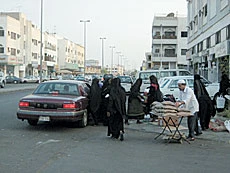
Zakah Al-Fitr stalls selling rice have mushroomed all over Jeddah in the run-up to Eid. Consequently, the stalls are dominated by teenage expatriates no older than 15. Besides the stalls linger fragmented groups of children and women dressed scantily to rouse the sympathy of Zakah Al-Fitr donors.
A source at Jeddah municipality said that there are full-time teams that would be conducting inspection campaigns during Eid all over the areas that are illegally selling Zakah Al-Fitr rice. Individuals who are found to be violating the law of residence or who are overstayers will be turned over to the Passport Department, investigated and then deported.
Sheikh Al-Humaidi, a Jeddah-based Muslim scholar, said the wisdom behind Zakah Al-Fitr includes two things: One is that it is an act of purification for a person whose fasting and the second is to feed the poor people on that day.
Zakah Al-Fitr is offered to the needy from sunset on the last day of Ramadan. It does not apply to anyone who converts to Islam after sunset, or marries, or was born after sunset.
Meanwhile, Saudi authorities arrested nine expatriates managing a storage warehouse for “cheated” rice including packaging it and distributing it at more than 40 locations in Jeddah — to sell during the remaining days of Ramadan.
The authorities involved in the arrests included the Ministry of Commerce and Industry and the regional municipality. More than 3,000 bags of different sizes were seized.