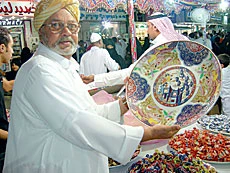
JEDDAH, 20 October 2006 — Go to the downtown area of Jeddah, the Balad, at night time during the month of Ramadan and half the world seems to be there. It is a seething, vibrant mass of busy shoppers, eager traders, pilgrims looking for a bargain, pilgrims hawking goods from home to pay for their trip of a lifetime — and throngs of people out for an evening’s entertainment. And as the month marches toward Eid climax, the festive momentum grows.
However, the members from the Committee for the Promotion of Virtue and Prevention of Vice see it differently. Wary of a deeply religious month becoming a consumer holiday, they and their supporters try each year to restrict the revelry.
Again, this year, they have told shopkeepers to tone down the atmosphere. It is not a message that Balad shop and stall keepers want to hear. They see it taking the fun (not to mention the profits) out of the season. Some say efforts by the morality police are more noticeable this year.
“It will affect tourism in Jeddah during this time of the year if people don’t feel as free as they used to,” said Abeer Abdulaziz, a 21-year-old college student who was walking along Balad’s scenic Qabil Street. “ I want to visit Jeddah’s downtown during Eid to see the celebrations and enjoy them. People have the right to be happy.”
Balad is, as usual, crowded with Ramadan shoppers and families out for a night on the town. But there are claims that the bustle and excitement have been toned down after vendors were warned about singing — a traditional practice of merchants advertising the delights of such festive products as chocolates, sweets, and baleelah (a Ramadan-season chick pea dish sold in cups), or of grilled chopped livers, goat cheese, olives and strings of hard, dried dates that are boiled along with dried fruits and nuts to make a traditional dish.
Abu Sabeen, a 70-year-old candy merchant, was one of the men who was told to avoid any outward display of enthusiasm for his goods.
“We (Ramadan street merchants) usually sing and recite poems about the products we sell, not only to promote ourselves but also to share the fun with everyone who passes by,” he said. He remains hopeful that officials will back off.
“This is how our welcome to Eid should be. There is nothing wrong about it.”
He says that the city’s historic center has always been a place where people meet and greet others. Each of the city’s original four districts still designates a day to host a large block party where residents from the other districts (and others) would be guests.
“It was simple, but it was fun and filled with traditional songs and laughter,” he said.
Mohammed Sallam, a 68-year-old toy vendor, also agreed that officials should encourage rather than discourage Ramadan revelry.
“All year long I await this month to witness celebration. And now it’s stopped,” he said.
Ahmed Abdullah, 30, said that he and his wife used to spend a few days at the end of Ramadan at Dar Al-Salam Holiday Inn because the hotel is located in the heart of the old city.
However, he said that he would not be going back if the Balad lost its charm ; there would be no point. He said the city should develop its Ramadan tourism, not discourage traditional, festive customs.
“There are no signs and no one to show us the way around the area,” he said. “It’s hard to find people telling stories from the past unless you seek it out from the elderly. It would be nice if what they know and do were taught to younger people who can keep the place alive.”