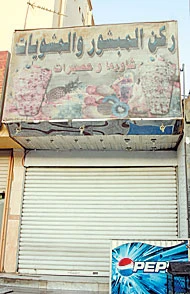
JEDDAH, 9 July 2006 — Around 50 diners at Jeddah’s popular Mabshour restaurant in the Al-Jamaa district were admitted to hospital over the weekend after suffering a severe bout of food poisoning.
Staff at various Jeddah hospitals, including the King Fahd Armed Forces Hospital (KFAFH) and the King Abdul Aziz University Hospital (KAUH), said they were inundated with diners from the restaurant coming to the hospital one after the other suffering the same symptoms.
Dr. Hashim Fadda, emergency room director at KAUH, told a local daily that KAUH received 14 cases of food poisoning over the weekend. The doctor added that all the patients were discharged from hospital the very same day, except for a young child who was kept overnight.
A woman diner, who was admitted to the King Fahd Armed Forces Hospital, told doctors and nurses that after their group, which consisted of 11 relatives, had finished their meal they started to feel stomach pains but did not think it was due to the food. After a short while the entire group started to feel dizzy, began throwing up and complaining of diarrhea.
The woman told doctors that it was surreal to see an entire group of 11 suffering from the same illness simultaneously.
Doctors said one of the family members immediately went to the Ministry of Health to lodge a complaint. Police spokesman Misfer Al-Juaid neither confirmed nor denied reports that the owner of the restaurant had been arrested. However, the Jeddah municipality has closed down the restaurant.
Market supervisor at the Jeddah municipality, Dr. Diaa Shujaa, said that there is a committee investigating the causes behind the outbreak. He added that such cases occur because workers do not exercise care in wearing gloves, clean uniforms and headscarves.
“Some of our staff go to such places undercover to catch restaurant owners and workers flagrantly breaking rules. Restaurants that are found to be breaking rules are charged and in some cases immediately closed,” said Shujaa to a local Arabic daily.
“It is not that we love the food but it’s easier, faster and cheaper to buy from such restaurants,” said 19-year-old Amro Hussain who frequently visits fast-food outlets across the city and admits that he knows that not all employees at restaurants are careful and aware of hygiene issues. “We just mention the name of God before we eat and hope everything will be fine,” he said.
Dr. Fahd Al-Jihaimi, director of Nutrition Science Department at the King Faisal University in Ahsa, called on municipalities across the Kingdom to continue checking and ensuring workers and restaurants remain clean and safe all the time.
Dr. Al-Jihaimi said 77 percent of the restaurants he surveyed do not maintain health standards set by municipalities. “Only 15 percent use gloves when preparing meals, this puts consumers at risk of bacteria transferring from people’s hands into meals,” he added.