JEDDAH, 9 November 2006 — The US government has realized the important role played by the Arab media, especially regional media institutions such as satellite channels, in presenting information and shaping opinion on the Arab street and has so decided to open a Middle East regional office for media communication in Dubai.
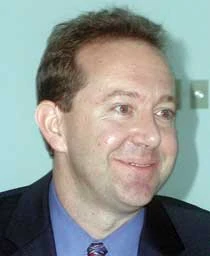
In a roundtable discussion with journalists in Jeddah yesterday, the director of the office Michael Pelletier talked about his job and the objectives of the office, which opened two months ago to facilitate communication with Arab journalists. Pelletier, who speaks fluent Arabic, is presently on a tour of the region to meet journalists and inform them of the office and the new US government initiative to build bridges with the Arab media.
“The most important thing I can offer with regard to the US stand on issues is present what is behind those foreign policy stands because they are based on values that are shared with the people of the region such as democracy, security and equality. We want to focus on the things we share and agree on,” he said.
The office specializes in communicating directly with the media and in future there might be a chance for the media to exchange programs. “The important thing is to open this dialogue and hear different opinions,” said Pelletier. “We believe in the freedom of the press but the media has a responsibility of presenting facts accurately and fairly. Satellite channels play an important role in having a culture of dialogue and openness,” he said.
The office will also play a role in explaining and clarifying the image of Arabs and Muslims to the US government and the reaction of Arabs and Muslims to certain issues. “I make a daily phone call to Washington on the important issues of the day in the Arab street,” said Pelletier.
Asked about the reaction of the US government to the comments made by Alberto R. Gonzales, US attorney general, on Al-Jazeera that US policy in Iraq was “arrogant” and “stupid,” Pelletier said that anyone who speaks to the media too much and in a foreign language eventually says something that they wish they didn’t say. “He apologized for his misappropriate choice of words,” said Pelletier.
The office will not have any role in cases related to Arab journalists, such as Al-Jazeera cameraman Sami Alhaj in Guantanamo, being held in the US. “This is something between the two countries,” said Pelletier.
Regarding attempts by the US government to reach out to the Arab public, for example through Al-Hurra channel and Radio Sawa, Pelletier said there is progress being made.
With regard to the Congressional elections and the possible effect of the outcome on US policies in the region he said, “The American foreign policy is based on discussions between the president and the Congress but it is the president who manages foreign policy. There is intense debate among the Republicans and Democrats on the policies in the region but the results will not be immediate.”
He added, “Both the president and the secretary of state admitted that there had been mistakes in Iraq but no one can say that under Saddam Hussein there was any hope for a future. Ninety percent of the violence now is in Baghdad; the rest of the country is flourishing. The goal is to build an Iraq that will play a positive role in the region instead of being a threat.”
The media plays an important role and the US wants to make sure that Arabs are hearing all sides. “I can’t deny there are problems in Iraq but there are also positive things. We should listen to more than one channel and read more than one paper to get a better picture,” said Pelletier.
As for Palestine, he said the US wants to see two states based on the peace roadmap and the quartet but the Palestinian government must work to establish security.