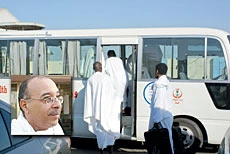
JEDDAH, 29 December 2006 — It was 8.42 a.m. yesterday in an unusually cool and windy Jeddah morning when a group of Saudis and expatriates boarded a bus to realize the dream of a lifetime. Abou Ahmad was one of the passengers, one of an estimated 2.5 million Haj pilgrims expected to fulfill their calling this year.
While many pilgrims undoubtedly suffer from health issues, Abou Ahmad has what is probably the most stigmatized and misunderstood infection on the planet: the HIV virus that leads to AIDS.
The 78-year-old Saudi and father of 10 is cheerful about his opportunity to perform his obligation to God, but he sheds tears when he tries to explain how his sons have rejected him because of the nature of his incurable infection.
Abou Ahmad is one of nine HIV-positive pilgrims, seven men and two women, who have been given the opportunity, thanks to the charitable acts of anonymous donors, to perform Haj. Their trips are fully compensated, and a doctor, a nurse and necessary medications and supplies will accompany them.
“I feel so relieved that I could perform my duty at last,” said Abou Ahmad during an event announcing the sponsorship of these pilgrims yesterday at Jeddah’s King Saud Hospital through the personal efforts of Dr. Sana Felimban, director of the medical center.
One of the charitable donors, who did not want to be named, said it was an honor to be able to help others perform their pilgrimage. “This money that I gave is God’s money,” he said. “I am merely a Muslim who has been given an opportunity to help other Muslims.”
The older patients were more responsive and interactive as they boarded the bus for their journey.
S.M., a Saudi patient in his late 40s who, like other patients didn’t want to be named in this report, said he couldn’t sleep the night before the trip to Makkah because he was so eager to go for Haj. “It is my first pilgrimage and I’m thankful to Allah and to the people who made it possible,” he said.
Ali, an HIV-positive Yemeni who lives with his family in Jeddah and who is also performing his first Haj, said that he is in desperate need to fulfill the journey.
“We have the right to perform all the duties that other healthy people do,” he said. “People do not understand HIV, therefore we are put in a sort of an exile even sometimes from our own families.”
One of the patients said that this trip was a “gift from God”.
Dr. Mohammed Sayed, a King Saud Hospital doctor who volunteered to accompany the group as a medical supervisor, said that they have made a thorough check on all the nominees for Haj to make sure of their fitness for the journey. He said that all of them have taken the necessary Haj vaccines and enough supplies of medication that they might need for their condition. The hospital’s staff is on a first-name basis with the patients.
Felimban said that last year they organized the first Haj trip for HIV patients, which was sponsored by the Islamic Relief Organization. The hospital also organized an Umrah trip for a number of patients earlier this year.
She said that the hospital is making efforts to spread awareness about HIV prevention, by giving away leaflets and booklets about the disease and distributing it to schools, colleges, private and public departments. They also conduct seminars and lectures.
Felimban thanked the donors for their contributions, and said this trip could be the beginning of an annual Haj program.
There are about 10,000 reported cases of HIV in the Kingdom, about one in three are expatriates. The World Health Organization estimates that for every one reported case of HIV there could be as many as nine others that go unreported. Carriers of the HIV virus can be healthy and undiagnosed for years, spreading the virus along the way and exacerbating the problem of tracking the actual number of AIDS cases.