ISLAMABAD, 6 January 2007 — The Rawalpindi Bench of the Lahore High Court yesterday ordered jail authorities to extend all legal facilities to a British Muslim suspected in a plot to blow up trans-Atlantic jets.
Police brought Rashid Rauf, 25, under tight security to the court for the hearing of his petition that he had been deprived of his legal rights in custody.
Rauf’s lawyer Hashmat Habib told judge Mohammed Kalim Khan that his client was being kept in the prison in Rawalpindi, near the capital Islamabad, under harsh conditions and had been held in handcuffs.
“The judge has ordered that Rashid Rauf should be given all the facilities available under the law and he should not be chained or handcuffed while in custody,” Habib said.
Rauf told reporters that he was innocent and had nothing to do with the alleged plot to blow up airliners that sparked a massive international security alert in August last year.
“I demand justice from the government of Pakistan, I am being punished only for preaching Islam and sporting a beard,” Rauf said.
“I am innocent, I have nothing to do with the airliners plot.” On Aug. 10, 2006, 24 people were arrested in Britain in a major swoop following the arrest of Rauf in central Pakistan. Eleven men, most of Pakistani origin, have since been charged in Britain with conspiracy to murder and terrorism.
The judge ordered yesterday that Rauf be remanded in custody for two more weeks.
The decision by the judge will make little difference to Rauf, as he is already subject to a detention order from a higher court.
Last month the Supreme Court extended his detention under a law, which allows authorities to detain a person for up to 90 days without charge.
Rauf was identified by Pakistani officials as a key figure in a plot to carry out suicide bombings on airliners traveling from London to the United States. But his case has run into a legal quagmire and is being dealt with by higher and lower courts simultaneously.
An anti-terrorism court dropped terrorism charges against Rauf on Dec. 13, citing a lack of evidence, and referred lesser charges, including the possession of explosives, to the civil court.
But a high court in Lahore, acting on a plea from the government, later suspended the trial in a move aimed at getting the case referred back to the anti-terrorism court.
The high court would decide on the jurisdiction of the trial on Jan. 15.
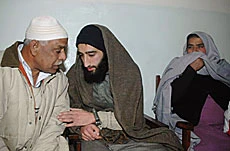
Handcuffed, wrapped in a shawl and wearing a cap, Rauf appeared yesterday before the civil court.
Police did not allow Rauf to speak to journalists, but he chatted with a sobbing aunt and other relatives inside the court after Judge Mohammad Kaleem Khan remanded him in custody until Jan. 19. Pakistani officials said Rauf had been in contact with an Al-Qaeda operative in Afghanistan planning the attacks on US-bound airliners.
According to reports, Rauf left Britain and traveled to Pakistan in 2002 after the murder in Britain of an uncle. Britain has sought Rauf’s extradition in connection with that murder investigation. Pakistan said it was considering the request.
Ban on Kite Flying
The Supreme Court of Pakistan has summoned the chief secretary and advocate general of Punjab to explain why the provincial authorities lifted a ban on kite flying imposed a year ago. The court ruled the decision was a violation of an earlier court order.
The move came a month ahead of Basant, an annual festival that heralds spring and is marked by boisterous parties and the flying of colorful kites in the eastern province of Punjab and its capital, Lahore.
Fliers strengthen their kite strings with wire or glass, sometimes with bloody consequences, to give an advantage in duels with opponents in a game that is won when one flier cuts another’s kite string.
Even before last year’s festival got into full swing, seven people were fatally slashed, prompting authorities — with limited success — to ban kite-flying altogether. They arrested hundreds who defied the regulation.