
ALKHOBAR, 9 January 2007 — In a world of rapidly advancing technology, criminals are becoming ever more sophisticated. As a response to this, police, commercial security and national security professionals are implementing ICT enhanced solutions to tackle crime in our digital age.
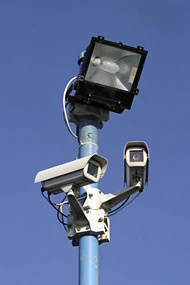
One technology that is becoming popular as a means to not only provide accurate information in order to catch criminals, but also to help in deterring crime, is closed-circuit television (CCTV). The use of CCTV in public areas has increased dramatically, causing debate over security versus privacy. CCTV can be permanently in service or, alternatively, turned on just when required.
While most nations in the Middle East are considered to have lower rates of crime than many nations in the Western world, security professionals estimate that between 1993 and 2002, crime increased by 46.2 percent in the Middle East. The ways in which ICT solutions can be used to help reverse this undesirable trend will be addressed at Intersec Middle East, set to take place at the Dubai International Convention and Exhibition Centre, Jan. 21-23, 2007.
CCTV is one of the technologies that will be prominently on display at Intersec. The first CCTV system was introduced in 1942, in Peenemuende, Germany, for viewing enhancement purposes of the “V-2 Rockets.” Europe was an early and enthusiastic adopter of CCTV. For example, after a governmental rollout of CCTV operations throughout the United Kingdom, in 2005 there were four million recorded CCTV cameras in operation in the UK alone. These cover public and private area surveillance, banks, retail outlets, roads, car parks and corporate and residential areas.
The Gulf Cooperation Council (GCC) countries are an escalating regional market for CCTV, with an estimated overall market value of $10 billion for safety and security products. One particular area of interest for CCTV installations in the GCC has been in airports, immigration and other border control operations.
Pelco, a global distributor of video security systems, began installing security cameras at Dubai International Airport in November 1998, and after several projects within the airport, the number of Pelco cameras represented at Dubai International Airport now stands at 600. Pelco is also involved in the installation of security cameras and other security measures at Dubai International Airport’s $2.5 billion Terminal 3 project, which is scheduled to become operational this year.
Closer to Saudi Arabia, the King Fahd Causeway, which links the Kingdom with Bahrain, registers over three million cars annually. All traffic entering Bahrain is recorded through the use of an enhanced CCTV surveillance system, observed by the Traffic and Immigration Directorate of Bahrain. This Norbain CCTV access controls system was installed by the company’s Middle East distributor, Yusif Bin Yusif Fakhro Company. In this CCTV system, nine Vista VPCMX high-resolution day/night cameras stand one meter high, facing all oncoming traffic. As the traffic passes the Saudi–Bahrain border, the cameras capture the image of a vehicle and its number plate. The project specification emphasized the importance of ensuring that Norbain’s Vista cameras could capture the Arabic car number plates day and night, despite the glare of full headlights and the extremes in temperature experienced by the location.
While governments were the first customers in the GCC for CCTV, businesses are now turning to CCTV to help cut commercial crime. In Dubai, some retail stores located in Naif Square and Nasser Square have experienced single incidences of $30,000 losses from shoplifting. Brig. Khamees Al-Mozainah, director of CID at Dubai Police, advises shop owners that it is a good idea to install surveillance systems in the interests of security. He stated that it is a known fact that just the sight of CCTV will discourage potential shoplifters from even entering stores.
The future of CCTV will be the introduction of IP CCTV, which will enable large amounts of information, including high-quality images to be transmitted through the cameras over high-speed Internet connections. It is expected that CCTV will be adapted to almost any public or private scenario, with IP CCTV surveillance running on wireless networks, situated inconspicuously as the cameras become increasingly smaller as a result of technological development.
IP CCTV installations are already in place in some urban areas. For instance, Newport City Council in South Wales, UK, has supported IP CCTV surveillance development, adapting it with the Local Education Authority, and installing it in schools to create a safer environment, cutting the cost of vandalism by an overall 40 percent in the first year of implementation. For the Middle East, IP CCTV installations are probably a few years distant as connectivity and network issues will keep the costs of such solutions prohibitively high.