
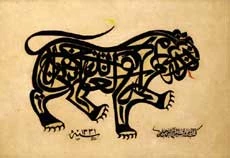
UNITED NATIONS, 26 February 2007 — The first Muslim woman ever to preside over the United Nations General Assembly of 192 countries, Sheikha Haya Rashed Al-Khalifa of Bahrain is finalizing arrangements for an informal General Assembly debate on the theme of dialogue between Islam and the West, to take place in May this year.
Her efforts follow the recommendations of the United Nations Alliance of Civilizations High Level Group, which submitted late last year a comprehensive report on increasing dialogue and understanding between predominantly Islamic countries and the Western world.
“We have established liaison with the General Assembly president and made our recommendations to her”, Shamil Idrees, director of the UN Alliance of Civilizations Secretariat told Arab News.
“My office is analyzing which of the Alliance recommendations to prioritize, and who should be implementing partners, “ explained Idrees who traces his family ancestry to the Caucuses region.
“As soon as Secretary-General Ban Ki-moon makes his choice known for a top level appointment for the Alliance these ideas will be finalized,” Idrees added. “Recently the secretary-general reiterated his intention to appoint a high representative.” He is putting together his own new team to run the UN.
In its initial focus on the relationship between Western nations and predominantly Muslim populations, the Alliance established priority areas for analysis and outreach. These include the political factors that contribute to extremism, the effects of media and education on mutual understanding, and the role of key population sectors of youth and immigrant communities. The Alliance is conducting outreach to organizations, activists, policy-makers, and scholars who are working or conducting research in these fields.
Numerous organizations have proliferated in the last few years to combat the perception of incompatibility between Islamic societies and the Western world. The UN provided names of over two dozen organizations that have embarked on missions similar to that of the Alliance of Civilizations.
However, according to a recent BBC poll that questioned some 28,000 people in 27 countries, the overall majority believes that there is no inherent incompatibility between Islam and the West, and that problems arise from intolerant minorities on both sides.
In furtherance of the objective of the philosophy to promote understanding in the West about Islamic culture and tradition, an exhibition on the work of Ibn Khaldun, the 14th Century philosopher of Arab and Islamic heritage, was recently organized at the United Nations. The exhibition was entitled
“Encounter of Civilizations: Ibn Khaldun” and was organized at the UN by the El Legado Andalusi Foundation of Spain. The prime minister of Spain co-sponsored the UN Alliance of Civilizations initiative, along with Turkey.
US visitors to the exhibition at the United Nations not only expressed their fascination at seeing images of art and learning from the Ibn Khaldun period, but also took special delight in finding their own shadows intermingle with 14th century images, by means of 21st century interactive video technology.
In addition to international organizations, American educational institutions are also organizing similar events to packed audiences. In mid-February Queens College in New York City initiated an extraordinary program in collaboration with the Middle East Project on Israeli-Palestinian Understanding. It started with recitation from the Holy Qur’an; then there were speeches by an Islamic scholar and a Jewish rabbi on the search for common ground; joint musical performances by Salman Ahmad of Pakistan and Samir Chatterjee of India; and the opening of an Islamic art exhibition. Entitled, “The Grandeur of Islamic Art in Image and Object”, the exhibition will continue to the end of May 2007.
Americans lauded in particular, calligraphic renditions at the Queens College Islamic art exhibition that includes pages from the Qur’an in Kufic script. One of art works that intrigues viewers is a blue silk textile from 18th century North Africa, over which the word Allah is repeated in gold lettering. A main attraction at the Queens College exhibition is a calligraphic composition in Thulth, in the form of a lion, signed by Ahmad Hilmi from Ottoman Turkey, dated 1913 AD, from Khalili Collection of Islamic Art.