
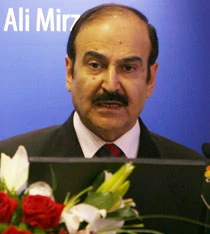
MANAMA, 13 March 2007 — Bahraini oil and gas officials announced yesterday the release of four offshore exploration blocks, covering the entire 7,400 km2 offshore acreage of the island.
According to Bahrain’s Minister of Oil & Gas Affairs and Chairman of the National Oil & Gas Authority (NOGA) Abdulhussain bin Ali Mirza, the four offshore blocks have attracted interest of 18 companies, but not naming them.
Block 1, which is 2,858km2, is to the north of Bahrain and neighbors Iran and Qatar, both of which have some of the world’s largest gas reserves.
Block 2, which is 2,228km2, is also to north of the island but closer to Saudi Arabia. Block 3, which is 1,088km2, is to the east of the island bordering Qatar, while Block 4, which is 4,78km2, is to the south and southeast of the island.
The bidding for the offshore round will close on Sept. 17, following a road show in late March and April that would take officials to London, California, and Texas.
The awarding of the contracts are expected to be announced on Oct. 31.
Mirza said the round was part of NOGA program in association with Bahrain Petroleum Company (BAPCO) to attract international oil companies to invest in production and exploration in the offshore blocks of Bahrain. During a joint press conference with BAPCO chief executive Mustafa Al-Sayed on the sidelines of the 15th Middle East Oil Show (MEOS 2007) in Manama, Mirza also said they were pushing ahead with a separate onshore development and production bid to reactivate opportunities in the discovered hydrocarbon assets.
Bahrain has only one oil field that was discovered back in 1931, known as Bahrain Field.NOGA is spending more than $1 billion to upgrade and modernize operations at the refinery, which is run by BAPCO. Bahrain also plans to add 700 development wells to maintain and increase production by 2015. Mirza who had earlier said that Bahrain wanted to increase its gas production by 500 million cubic feet a day to meet electricity power demand, adding that his government was still in talks with Iran, Qatar, and Saudi Arabia to secure gas imports.
“We are in talks with neighboring Iran and Qatar as well as Saudi Arabia to secure an import of one to two billion cubic feet per day,” he said, sighting that they have reached an initial agreement with both Iran and Qatar to secure the gas imports.
Al-Sayed, who said that the prospects of discovering oil and gas with commercial value were high, pointing out that the number of offshore blocks had been reduced from six to four so that each block has more potential.
On Sunday, Mirza warned against political tension in the region and called for continued global support y to help ensure continued stability.
Speaking at the opening of MEOS 2007, he said that instability could affect the ability of the region to meet increasing oil demand. “One can not emphasis enough, the need for political and social stability in this important oil and gas region,” Mirza said. “It will necessarily require cooperation of the entire global family members to keep this sensitive part of the world away from any tensions, conflicts or encounters that may disrupt the regional balances”.