KANDAHAR, 19 August 2007 — A suicide bomber rammed his explosives laden vehicle into a US convoy in southern Afghanistan yesterday killing 15 people, including 11 civilians, and wounding 26, police said.
The attack, the second in two days, was in a crowded area west of the city of Kandahar, the birthplace of the Taleban movement that is now waging an increasingly bloody insurgency against Afghan officials and foreign troops.
“Fifteen people, four Afghan security guards and 11 civilians were killed and another 26 including 19 civilians and seven guards were wounded in the suicide blast today,” police chief Sayed Aqa Saqib said.
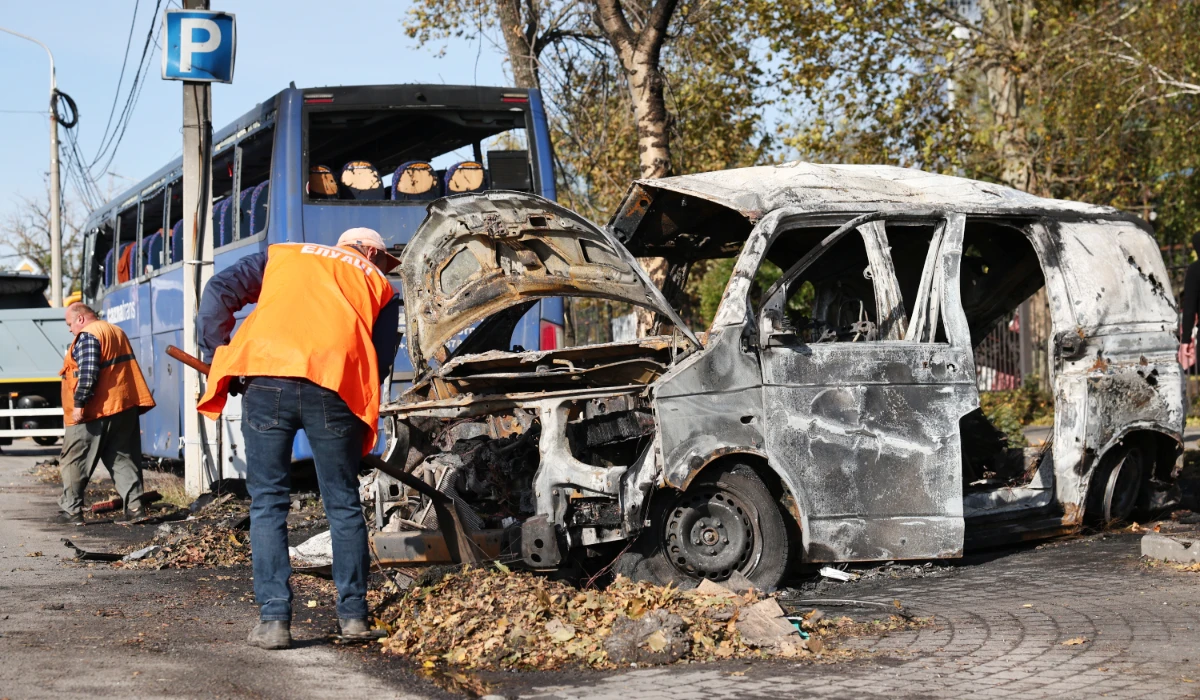
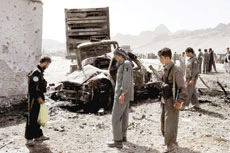
The logistics convoy, which was guarded by a US private security firm, was heading to troubled Zehri district in Helmand province when the attack took place. The blast destroyed two vehicles belonging to the guards and a civilian minibus, said police at the scene.
“The bomb was so strong that it ripped through the civilian minibus and several other vehicles,” police officer Jan Mohammad said.
Body parts and pieces of metal from the suicide bomber’s car were scattered 100 meters (yards) from the site of the blast, which partially destroyed the outer wall of a nearby mosque.
Bloodied turbans, sandals and shoes littered the pavement. One of the convoy’s security guards collected body parts and bits of flesh from the road.
Ten passengers aboard the minibus were killed. Only one woman and her baby daughter emerged from the bus unscathed. She leaned against the wall of the mosque, wailing uncontrollably.
Yesterday’s attack was the latest of a series of suicide bombings by suspected Taleban militants against Afghan and foreign forces in the war-ravaged country.
On Friday another suicide attacker blew himself up outside the house of a district governor in Kandahar, killing the official and three of his children, and wounding three others.
Kandahar has been a hotbed of violence since the Taleban militia emerged from the city and the surrounding region in the early 1990s to take control of the Afghan government by 1996.
The militants have employed the Iraqi style of suicide attacks, roadside bombings and guerrilla tactics against Afghan and foreign forces in Afghanistan.
Suicide attacks are considered a post-Taleban phenomenon as they were unknown in Afghanistan during more than a decade of Western-backed jihad, or holy war, against the Soviets invasion of the country.
The Taleban was driven from power in late 2001 by a US-led coalition for failing to hand over their allies in Al-Qaeda, the extremist network behind the Sept. 11 attacks on the United States.
But the militants carry out regular attacks against Afghan officials and soldiers, as well as the international troops deployed here to support the government.