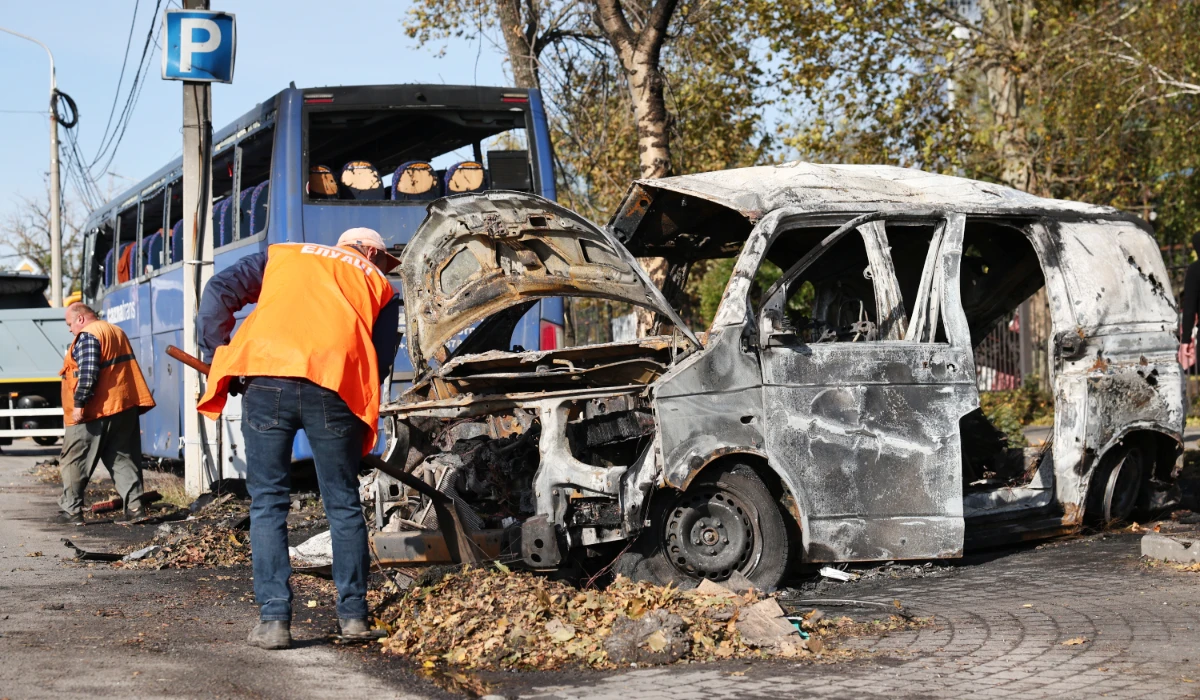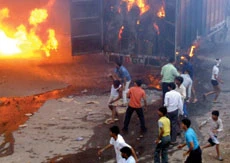
NEW DELHI, 30 August 2007 — A curfew was imposed in parts of Taj Mahal city of Agra after angry mobs set fire to vehicles and blocked roads yesterday. The rioting, that left one person dead and 50 injured, was sparked by the deaths of four men hit by a truck, sources said.
Police says now the situation was under control but advised tourists and residents to stay indoors. All schools and colleges in the city were closed for three days, the world-famous Taj Mahal was also closed to tourists yesterday, local government spokesman J.N. Chamber told reporters.
Angry residents of the Nai Mandi area of the city went “berserk after a speeding truck killed four people,” said Vikram Singh, the director-general of police in Lucknow, the capital of Uttar Pradesh state, where Agra is located.
The victims, all Muslims, were walking home after a religious festival, Singh said.
Rioters fought pitched battles with police, pelting them with stones, glass bottles and setting vehicles alight.
The Uttar Pradesh state government issued an advisory asking tourists to stay in their hotels until order was restored in the city, 200 km south of New Delhi, with the curfew effectively blocking access to the 17th-century monument to love.
“Four died in a road accident earlier in the day and one more was killed in violence that broke out later,” said Mukesh Meshram, a senior official in Agra district.
News of the accident — some four kilometers from the Taj Mahal — spread quickly and residents spilled onto the streets, witnesses said.
Earlier J.N. Chamber, a senior government official, told the Times Now news channel that special anti-riot police had been sent to the area to contain the unrest.
The Nai Mandi neighborhood of Agra is home to both Hindus and Muslims and the two communities have often clashed, but Chamber said the rioting was not sectarian.
Hotels and tour operators organizing visits to the white-marbled monument said Indian and foreign visitors were safe.
Built by Emperor Shah Jahan as a tomb for his beloved queen Mumtaz Mahal, the monument is normally open to visitors for about 12 hours from 6.30 a.m.
“Some visitors from our hotel had been to the Taj this morning but they have all come back safe,” said Mukesh Rai, who organizes visits to the mausoleum.
“There is one way still open and three of our visitors who had gone came back very soon — well before the curfew was declared,” he added. “I don’t see any escalation in the crisis.” Sunil Sharma, who works with another hotel, said half a dozen visitors from there who toured the Taj earlier yesterday also returned safely.
“I think things are settling down,” he said.
But an official for the luxury Mughal Sheraton — one-and-a-half kilometers from the Taj Mahal - said it had received many cancellation requests since yesterday morning.
“The main motive of people visiting Agra is to see the Taj, and when they heard about the curfew, I think people preferred to cancel,” the official, who declined to be named, said.
Some 20,000 workers toiled for more than 20 years to build the tomb in an age of opulence when Muslim rulers mined precious gems to fund construction of grand projects.
Almost three million domestic and foreign tourists visit the Taj annually, more than any other tourist site in India. In July, it was voted as one the world’s top new “Seven Wonders” through a mobile phone text message and Internet poll.