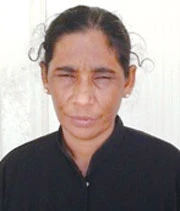
RIYADH, 6 September 2007 — Just over three weeks ago a woman called up Arab News claiming to be a Sri Lankan maid who has been imprisoned and abused in the home of her sponsor for the past decade. Yesterday, Riyadh police, working with the Sri Lankan Embassy, rescued Anista Marie, 40, who has not received her salary since 1999.
“I still cannot believe that I am out of this ordeal that I have undergone for the past 10 years,” Marie told Arab News with tears flowing down her cheeks.
The rescue took place at a villa in Khansalallilah district, some 12 km away from the Riyadh city center. The maid’s sponsor refused to give up her passport to police, and it is unclear what if any punitive actions will be taken by authorities against the woman who Marie alleged has been her abusive overseer in what the maid earlier claimed was an all-woman household.
“We are thankful to the Saudi authorities for rendering necessary assistance to redeem the woman from this house where she has been a virtual slave for more than a decade,” said W.S.M.S. Wijesundera, charge d’affaires at the Sri Lankan Embassy.
He said the mission had to send a team of officials with the Saudi police to take her out from the clutches of the sponsors who were reluctant to send the maid. Police did not detain the sponsor yesterday for alleged illegal imprisonment and violation of labor laws. It is not known if Marie’s working visa is current, or if the sponsor also violated the law for allowing the visa to lapse.
Meanwhile, Marie said that she has been confined indoors during daylight hours for most of the past decade and that the bright Saudi sun is hard on her eyes. “They only took me out at night so that I could not locate the house,” she said.
When this reporter received a phone call on Aug. 14 from Marie, she told Arab News that she didn’t know where she was located. She said that the only reason why she knew she was somewhere in Riyadh was because a maid of a visiting family once told her of her general location. Now Marie, a widow with four children from an impoverished fishing family in Chilaw, 70 km from Colombo, just wants to go home.
“I do not want anything now but to fly home to see my children who have been suffering like orphans without their parents,” Marie said.
In the Aug. 14 phone call, Marie said she was paid for the first two years of her employment, and that she was allowed to go out with the family. At the time, she was under the impression that she would be eventually allowed a home visit. She said she even bought clothes for her children planning for that trip.
“Back then I bought things for my children,” she said. “They’re still packed in two suitcases and the clothes can’t be used by my children now because they’ve grown out of them.”
During this time, her husband passed away and her children have been in the care of extended family. She said it took two years for her to hear news that her husband had died.
Sri Lankan Embassy officials are making arrangements for Marie to speak to her children over the phone. Marie is currently in the care of the Sri Lankan Embassy, which like other South Asian missions, has facilities to care for runaway and abused domestic staff, mainly women working as housemaids.
According to the maid, the household consists of three women with four teenage daughters. “There were no men in the house,” she said. “They assaulted me when I would say that I wanted to go home. It was worse when I talked about the salary.”
Marie said a sympathizer helped her get in contact with Arab News.
Wijesundera said that the mission would negotiate with the sponsor to pay her past dues including her salary, holiday pay and other allowances due to her according to the local regulations.
“She comes from a poor family and she needs some money to send home. I will request my community members and the Sri Lankan Expatriates Society (SLES) in Riyadh to give her help in whatever form to rehabilitate her family back home,” the diplomat said.
It was unclear yesterday if the maid’s sponsor will face criminal charges or whether anything more than negotiating for nonpayment of eight years of salary will take place.