
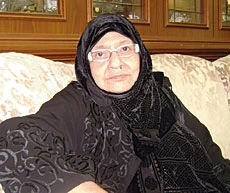
MAKKAH, 9 September 2007 — Rahma Shabana is a well-known name in the Tawafa business. For over 50 years she has invested her time and effort in providing different types of services to pilgrims, particularly those coming from Indonesia, Malaysia, Singapore and the Philippines.
In spite of her old age and stiff competition, Shabana continues to successfully and effectively run her business. In fact, she has become a household name among Southeast Asian pilgrims. She belongs to a well-known Makkah family and hails from a line of former pilgrim guides.
“My grandfather Ismail, my father Othman, my three brothers Mustafa, Ismail and Ali and my husband have all been pilgrim guides. Now, I’m teaching the ins and outs of this work to my son Khaled,” she said.
Shabana has, over the years, gained the trust of pilgrims and even traveled to various Southeast Asian countries to collect pilgrims and bring them to Makkah and Madinah. She prides herself on being able to provide pilgrims, many of who are on their first trip to the Kingdom, with a step-by-step guide in performing the sacred rites.
According to Shabana, honesty and faithfulness is important in her job. “This is the key to success in this job. Pilgrims put their money in my hand and they trust me after having traveled long distances. So I have to be honest with them and provide them with the best services,” she said.
Being a veteran, Shabana has a good working knowledge of how the pilgrimage used to be conducted 50 years ago. She began Tawafa work in 1957 with her husband. “It was difficult working at that time. Transport wasn’t very modern and there weren’t so many buildings back then. I used to cook food myself and carry food to wherever the pilgrims were,” she said.
“Food would include rice and fried fish and a sweet made of flour fried and placed in sugar. We used to serve 300 pilgrims. It wasn’t too bad back then. However, the number kept increasing until it reached 900. I then had to bring some cooks from Malaysia,” she said.
With a lack of medical professionals in those days, Shabana would also double as a nurse providing pilgrims with vital medicines and taking them to hospital if their cases were serious. She would even wash and dry people’s clothes.
“I used to even travel to their home countries and teach them how to perform Haj and Umrah. I would encourage people to perform the pilgrimage and tell them to come with me. Many of them would sell their valuables to perform Haj but they needed a guide and that is what we do,” she said.
Her visits to Southeast Asia and work with pilgrims from there have helped Shabana develop strong relations with diplomats from these countries. However, being a popular pilgrim guide has its drawbacks and has attracted the ire of competitors. On her visit to one Asian country she was threatened with dire consequences and her car was involved in many deliberate accidents. “Some would use every possible way to prevent me from reaching Muslims in far villages and towns,” she said.
Before the formation of the Tawafa organization, Shabana used to rent entire buildings in Makkah for pilgrims. Some of the buildings she rented would at times cost as much as SR1 million. “I used to buy the furniture and prepare each room in such a way that they could house around four to six pilgrims. We also used to provide them with three meals and would ensure that they find everything they need on their arrival,” she said.
Shabana is fluent in various Southeast Asian languages and is able to guide pilgrims and encourage them to be patient and tolerant while performing Haj. “I would also arrange everything for their Madinah trip. I would welcome them and ensure that everything is ready and organized,” said Shabana, adding that ethics are important in each and every job, especially Tawafa.
Shabana urged different Tawafa members to cooperate with each other to give pilgrims better services. She also praises the government for helping guides and said she would like to meet Custodian of the Two Holy Mosques King Abdullah to talk to him about some of the problems faced by pilgrim guides.

