JEDDAH, 7 October 2007 — Fresh-camel-milk vendors have decided to take their chances against the law that earlier this year tightened the screws on the selling of the dairy product on the sides of roads. The windfall of profits during the Ramadan holiday shopping season, say the vendors, is too tempting to pass up. On the other side of the fence are the customers, usually Saudis, who are ignoring the ban because they can’t imagine breaking a Ramadan fast without this traditional drink.
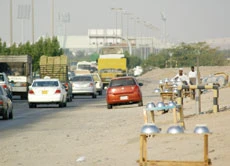
The vendors have for years used the Jeddah Stadium Road, located behind the industrial zone in the southside of the city, as their informal camel-milk market. Earlier this year the authorities managed to clear the area of these vendors and their camels. But yesterday they were back in their places, and in throngs, to cash in on the popularity of camel milk on the Saudi dining table during the month.
“This is the biggest season for camel milk,” said Othman Saleh, a Sudanese camel-milk vendor, standing next to tables stacked with metal bowls of different sizes to measure out the quantities. “We came back during Ramadan because the demand is so high and usually municipality officials are busy with other vendors around the city.”
Saleh says the SR200 he can make selling milk from his herd is an opportunity that is difficult to refuse. “The income is surely worth the risk,” he said.
Earlier this year, the municipality announced a ban on the sale of raw camel milk because of the health risks of non-pasteurized dairy products sold in potentially unhygienic conditions.
In a previous interview, Awad Al-Malki, head of the municipality branch in south Jeddah, said that the municipality’s anti-hawker committee has confiscated all the equipment used by camel-milk salesmen who are located in the Al-Khomrah area.
Meanwhile, a source at the municipality, told the Arab News that Ramadan season is the busiest time of the year for inspectors to monitor the streets for illegal vendors, which they say triple in number during the holy month.
Ali Muslih, a middle-aged Saudi customer of one of the vendors, said that the ban on the sale of camel milk at these informal street operations has not stopped him or others who enjoy the salty nutritious milk. “When the vendors aren’t here, I drive south until I reach camel farms and buy the milk there,” he said. “We can’t break our fast without camel milk.”
Camel milk is considered a very healthy nutrient that contains 40 percent less fat than cow’s milk. According to the United Nations Food and Agriculture Organization, camel milk is three times as rich in Vitamin C as cow’s milk and it is known to be 10 times richer in iron and B vitamins. Because of the low lactose content, it tastes saltier.
According to a report posted on FAO’s website, there are an estimated 200 million potential customers for camel milk in the Arab world and millions more in Africa, Europe and elsewhere.