
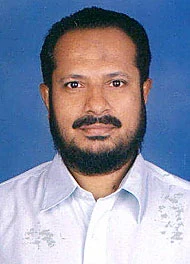
JEDDAH, 13 October 2007 — T. Arif Ali, president of Jamaat-e-Islami in Kerala, has emphasized the need for creating a third political alliance in the state after the Left Democratic Front (LDF) and United Democratic Front (UDF) failed to come up to the expectations and aspirations of their people.
“The actions of the LDF and UDF have proved that their main objective is not the welfare of people,” the Jamaat president said. “Over the past years, people have been forced to vote for either LDF or UDF during elections because there has been no alternative and now they are looking for a new political alliance.”
“In every election people have been making ‘anti’ votes. They vote for the UDF not because they’re better than the other alliance but because they wanted to defeat the LDF, and vice versa. Issues like Munnar, professional colleges and administrative corruption have proved that there is great potential for a third alliance.”
Ali called for a feasibility study on formulating a third alliance that can steer the state to greater progress and prosperity, finding radical solutions to people’s basic problems and taking action against different mafia groups that have eaten from the public trough for too long.
In an interview with Arab News, Ali emphasized Jamaat’s efforts to promote communal harmony in India, by establishing closer relations with other communities and adopting effective measures to solve their problems. He also disclosed plans to organize a state conference for Muslim women, which will be first of its kind to highlight women’s problems and protect their rights.
He announced Jamaat’s decision to participate in Panchayat elections in the state for the first time, adding that the move would help the organization extend better services to society. Jamaat workers in other Indian states, such as Tamil Nadu, Andhra Pradesh and Uttar Pradesh have already contested Panchayat elections and won some seats, he pointed out.
Ali said Jamaat has taken the initiative to solve the problems of the downtrodden, irrespective of their caste and creed.
“We believe that only when Muslims consider the problems of other religious communities will others take up Muslims’ problems as theirs. We support the organizations of Dalits and other backward classes in the country.”
He said Jamaat was also trying to mobilize people belonging to different religions in order to foster cooperation among them, uphold moral values and protect human rights.
He said Jamaat’s relief activities covered not only Muslims but also a large number of non-Muslims in the country.
“About 80 percent of the beneficiaries of our Tsunami Relief Fund were non-Muslims as the calamity had struck non-Muslim areas.. We promote closer human relations and brotherhood by urging our supporters to love and help all human beings, irrespective of their religion, and this is one of our major achievements,” he said.
He described Jamaat’s efforts for the prosperity of Indian Muslims as a national duty as the country cannot make progress by ignoring progress and welfare of an important section of its population. “Literacy rate among Muslims in India was 93 percent before the arrival of British colonialists. This rate declined to 11.5 percent after their arrival and reduced further to 8.5 percent during the last 60 years of independence,” Ali said, quoting a statistical report.
In a major policy shift to win the hearts of Muslims in the state, the Jamaat chief said his organization would not use its mosques and madrasas as venues to promote the party.
“We have established so many mosques and we want to change its status from a party mosque to a common mosque. We will also revise syllabuses of our madrasas and other educational institutions in order to make them acceptable to all members of the community. We will also publish books of Hanafi and Shafie schools of thought and give them wider publicity.”
Speaking about his organization’s efforts to empower Muslim women, Ali said a woman has been elected to its Shoura Council in the state for the first time. He said the forthcoming state conference would focus on the rights of women.
“We believe that Muslim women should be given all the rights and powers which they enjoyed during the time of the Prophet (peace be upon him) and his companions.”
Ali said the conference would raise some revolutionary slogans and discuss major issues concerning women. “We have a plan to invite prominent women personalities around the world. It will be a two-day conference and we expect participation of more than 100,000 women,” he explained.

