JEDDAH, 22 October 2007 — Turkish Foreign Minister Ali Babacan emphasized yesterday that the Turkish Parliament’s decision last Wednesday gave the government authority to target terrorists in northern Iraq and not the people of Iraq or its territory or natural resources.
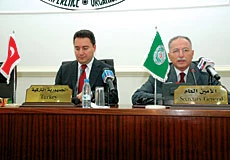
He was speaking at a press conference at the Organization of the Islamic Conference (OIC). The decision was taken amid escalating attacks by the Kurdish group the PKK against Turkish soldiers during the past few days.
Yesterday, the Kurdish rebels captured a group of Turkish soldiers after fighting on the Iraq border; 16 Turkish soldiers were killed earlier in the day by a Kurdish attack. Meanwhile, Iraq’s Kurdish leaders refused to hand over top Kurdish rebels to Turkey warning that they would defend against a Turkish attack.
OIC Secretary-General Ekmeleddin Ihsanoglu, himself a Turk, said that the organization has a principled stand against all terrorist activities whether by individuals, groups or states and that Turkey has the right to defend itself.
The foreign minister is in Saudi Arabia as part of his first tour of the region, which so far included Syria, Jordan, Lebanon, and Israel. He presented a letter to the Custodian of the Two Holy Mosques King Abdullah from Turkish President Abdullah Gul and attended the groundbreaking ceeremony by King Abdullah of the King Abdullah University for Science and Technology in Thuwal yesterday. He also met with Foreign Minister Prince Saud Al-Faisal.
“My visit is to review bilateral relations with the host countries. Turkey’s relationship with Saudi Arabia is excellent,” said Babacan. He said that Turkey hosted King Abdullah in 2006 and would like to host him again. He said that the close personal relationship between Turkey and Saudi Arabia is reflected in many ways such as the strong business relations. His visit is also to discuss regional issues including Iraq, Palestine and the upcoming elections in Lebanon.
He emphasized that Turkey strongly supports the political unity and territorial integrity of Iraq and would like to see the people of Iraq happy and prosperous. “We do have a problem with terrorism by the PKK killing people. Last month they killed 45 civilians and noncivilians. The PKK is based in northern Iraq. We tried to cooperate with the Iraqi authorities and the US. Last Wednesday, the Parliament gave the OK for the government to act when necessary to target terrorists, not people of Iraq or territory or natural resources.
“If the US and Iraq authority cannot act, we cannot sit and watch. The position of the Parliament is self-defense. We are determined to fight this terrorist organization. No one should dare to challenge our decision in this matter,” he said.
He said Turkey expects solidarity and cooperation against terrorists. The foreign minister spoke about his visit to the OIC, which is to express full support to the OIC and its secretary-general. He said that the OIC will have a more crucial role to play in the future regarding issues facing the Islamic countries.
Earlier, Prime Minister Recep Tayyip Erdogan called crisis talks to consider a military strike against rebel bases in Iraq.
This was in reponse to the attack, one of the worst in more than a decade by rebels of the outlawed Kurdistan Workers Party (PKK), which came four days after Turkey’s Parliament approved a motion to allow troops to enter northern Iraq to fight guerrillas hiding there. “We are very angry... Our Parliament has granted us the authority to act and within this framework we will do whatever has to be done,” Erdogan told reporters.
He said military and government officials would meet at 8 p.m. under President Abdullah Gul to decide the response. Gul said: “Iraq continues to harbor terrorists and Turkey has the right to eliminate the terrorists. Parliament has given the authorization for this.”
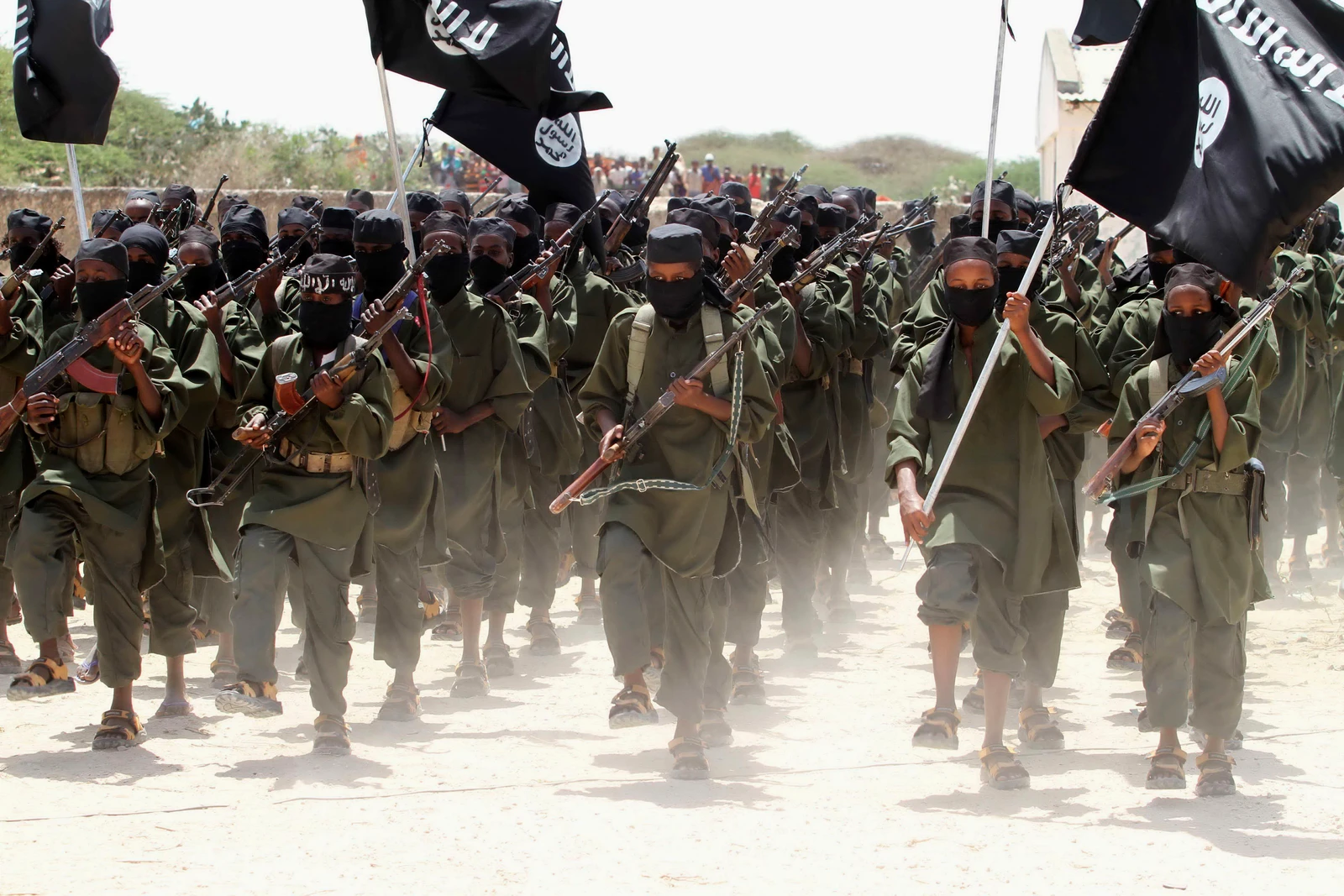
In Iraq, Kurdish rebels said they killed at least 16 Turkish soldiers and had taken “several” hostage in the clashes. “We cannot give details on how many we have captured, all I can say is that they are not in Iraq. They are in Turkey,” a senior PKK source told Reuters. Turkey’s military general staff said 12 soldiers and 23 rebels were killed in the clashes. Turkey shelled areas inside Iraq yesterday morning but no casualties were reported.
In a separate incident yesterday, a land mine killed one civilian and wounded at least 13 more in a minibus traveling close to where the soldiers were killed. The United States, Turkey’s NATO ally, and Iraq have urged Ankara to refrain from military action, fearing this could destabilize the most peaceful part of Iraq since the US-led invasion in 2003 to topple Saddam Hussein.
Iraqi Kurdish leader Masoud Barzani said his autonomous region would defend itself if Turkish troops invaded. “We are not going to be caught up in the PKK and Turkish war, but if the Kurdistan region is targeted, then we are going to defend our citizens,” Barzani told reporters after meeting Iraqi President Jalal Talabani, who is also a Kurd. With the death toll among Turkish security forces around 40 for the past month alone, Erdogan’s government is under heavy domestic pressure to pursue the PKK into northern Iraq.
Turkish Voters Back Referendum
Meanwhile, Turkish voters resoundingly backed plans in a referendum yesterday to have future presidents elected by the people instead of by Parliament. Preliminary results showed about 70 percent of voters approved the constitutional changes proposed by Erdogan’s ruling center-right AK Party, while 30 percent voted no, but turnout was low for Turkey at barely two thirds. Some political analysts said the AK Party had mishandled the referendum process, alienating opposition parties through a lack of consultation and thus undermining its stated aim of boosting democracy in Turkey, a European Union candidate nation.
The vote will not affect the status of President Abdullah Gul, who was elected by parliament for a seven-year term in August. His successor will be elected by the people in 2014. Yesterday, voters also endorsed plans to reduce the president’s term to five years, renewable for a further five, and to cut Parliament’s term to four years from five.
— With input from agencies