MAKKAH, 28 October 2007 — Saudis with criminal records once released from prison say that resettling in society and finding jobs and prospective marriage partners is an uphill task.
Arab News met a number of criminals to see what life is like for them. Majority of them complain that the wider society treats them like outcasts and believes that criminals are unable to lead a normal life.
“While in prison for the first time, my wife asked for a divorce,” said a Saudi man, who was sentenced to prison in Makkah for assault. This is the second time the man, a former Health Ministry employee who asked his name not be published, is in jail. He was previously sent to jail for five years after being involved in a murder.
“I delayed divorcing her until I got out of prison. However, she insisted on ending the marriage,” said the father of three. “What was worse was the fact that I couldn’t find a job in the private sector because I had a criminal record. I tried to stay in control but everything was against me,” said the man, adding that he was stressed and was involved in a fight, which led to him being sent back to prison.
Another prisoner, a former security guard, was sent to jail following a conflict with his neighbors. “My siblings were being bullied by our neighbor’s children. I interfered and ended up in prison for four years,” said the man, who also asked his name not be published.
He added that he was able to complete his elementary education in prison and undertook courses in sewing, electric work and computing. “When I came out of prison I was fired as a security guard. I didn’t worry because I thought I could easily get a job with all the certificates I had gained in prison. But in every job I applied they would ask me to provide a clearance form stating that I had never been to prison. Once they found out I had a criminal record they stopped accepting me,” he said.
The youth added that he has found it equally difficult on the marriage front. “Whenever I go to charity organizations asking for help to marry they refuse to offer support because I’ve been to prison,” he said, adding that following a fight he was again arrested and sent to prison by a court.
G.T., who also asked his name not be published, said that he was leading a happy life working in a government job and being paid a good salary. “I was involved in drugs and was sent to prison for five years. Once I came out, I couldn’t find a job and couldn’t get back into normal life. I started using drugs again and here I am in prison once more,” he said.
Among prisoners at the Makkah prison was a mentally ill man who has repeatedly been sent to jail for vandalizing cars. “I’ve been sent to jail nine times and I’m willing to come back when released. People outside don’t change their minds about how good or bad I am. Prison is my home and life,” he said.
Abla Hassanain, a psychologist, said that media has contributed to creating a common stereotype that ex-prisoners are unable to lead normal lives once released. “The private sector reinforces this idea by not allowing prisoners to have jobs because they fear ex-prisoners cannot sort themselves out,” she said.
“Religious preachers and sheikhs need to play a role in changing this stereotype by explaining to the public that prisoners can still lead normal lives after leaving prison. Sheikhs can also help prisoners find wives and have families,” she added.
Sami Al-Lihyani, head of the Psychological Health Center in Makkah, agreed with Hassanain. He added that ex-prisoners get into trouble and develop a mentality that society does not want to accept them. “The prisoner is the one who decides whether he wants to feel down and go back to prison or take his circumstances as a challenge to better himself. This is determined very much by motivation and religious faith,” he said, adding that some prisoners have memorized Qur’an while in jail, and became productive members of society.
Al-Lihyani urged businessmen to help prisoners by offering them jobs. “We all make mistakes and so we need to sympathize with ex-criminals until they’re able to adjust themselves and become an asset to themselves, their families and the wider society,” said Col. Muhammad ibn Hashlul, head of the Prisoners Affairs Department in Makkah.
Hashlul added that if the wider society does not reach out to prisoners then society would lose out because prisoners would simply slip back into a life of crime and become a burden on society.
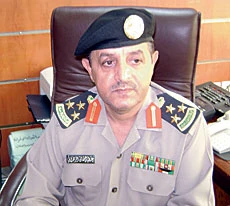
Brig. Gen. Atiya ibn Uthman Al-Zahrani, head of the Makkah Prisons Department, said that there are several committees that help prisoners once they leave prisons. “These committees include people from the Ministry of Labor, the Ministry of Health and the National Committee for Supporting Prisoners and Their Families,” he said, adding that the committees are helpless unless society begins to change its attitude.
“This could be achieved through increasing awareness among people that ex-criminals can still be productive and can have normal jobs and families like other people,” he added.
Khaled Bajahzar, imam of the Al-Kakia Mosque in Makkah, said that if a prisoner memorizes the Qur’an while in prison then he only has to complete half his prison sentence. “This is a good step and we must treat all prisoners in the same way by helping them become better citizens,” said Bajahzar.