
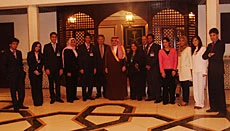
LONDON, 5 November 2007 — Young Britons and Saudis joined recently in London to share thoughts about their generation, from how their governments can best help them succeed to the best ways of combating extremism at the UK-Saudi Youth Forum.
The forum was a prelude to the Two Kingdoms Conference, attended by ministerial and governmental officials from both countries along with legislators, media personalities and businessmen. The young forum delegates were tasked with exploring the challenges facing their generation in the two kingdoms and what could be done to help them realize their aspirations. Saudi forum participants were selected for their command of English language, academic performance, extra-curricular activities and their capacity to act as ambassadors representing their country.
Participants attended orientation sessions before departing for the forum to meet their colleagues and receive briefings and materials to prepare their presentations. Upon their arrival, British Foreign Office officials greeted and escorted them to their hotel and a dinner where they met their British counterparts. It did not take long for the young Britons and Saudis to strike up friendships, replacing misconceptions and stereotypes with the understanding that accompanies experience. By the end of the evening, the young people enthusiastically exchanged e-mail addresses and mobile numbers, looking forward to the business of the forum.
Participants prepared national reports on the conditions of youth in their countries and present summaries at the forum. The Saudi group researched all government youth programs along with ways in which young people come together locally, regionally and nationally. They also researched the different groupings in their countries and gave examples of successful youth activities and the methods by which young people interact with other young people abroad. After each presentation, the two sides exchanged views and discussed better services and more effective programs to ensure that youth become contributors to their societies.
The workshop was well structured, and the facilitators were excellent. Stimulating exercises allowed young people to reflect on their needs and conditions. Activities included exercises in swapping cultures and sharing a vision to promote positive values and to counter the extremists who would drive them apart.
The many recommendations of the delegates included more participation for the young and support for youth-led initiatives, such as parliaments, school councils and youth projects. Delegates were critical of the media, emphasizing that the positive achievements of their generation were neglected in favor of failure, leaving many people with negative opinions about them.
Above all, they called for quality education that encourages critical thinking and open debate. They asked for updated curricula that provide life and career skills and more opportunities for intercultural exchange, dialogue and learning. They also expressed hope that an older generation was listening to their concerns and would empower today’s leaders so that dreams about their countries become the reality of the future.
The Saudi young women and men were the guests of the British Foreign Service who organized a special program that included a trip to Shakespeare’s globe theater and a ride on the London Eye. The young group also met with Prince Mohammed Bin Nawaf, the Saudi ambassador to the United Kingdom, who thanked them for their excellent contribution. He congratulated them on a job well done and wished them success in their future endeavors.
Although the youth forum officially ended, it continues between the future leaders of these two nations by way of e-mail and Internet communities such as Facebook. The communications tools of this new generation may help eliminate the cultural distance of the past caused by the vast distance in miles between the two countries — a diplomatic start to a new era of communication — and understanding — between the United Kingdom and Saudi Arabia.