ISLAMABAD, 12 November 2007 — Pakistan’s President Gen. Pervez Musharraf yesterday promised countrywide general elections before Jan. 9, but did not set a deadline for lifting the state of emergency he declared Nov. 3.
Opposition leader Benazir Bhutto welcomed the declaration as the “first positive step” and Washington urged the military ruler to lift the state of emergency as soon as possible.
Other opposition leaders said elections under emergency rule would make a mockery of the democratic process, especially as Musharraf gave the army sweeping powers to try civilians on charges ranging from treason to inciting public unrest.
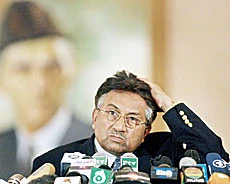
In his first news conference since suspending the constitution a week ago, Musharraf bristled at criticism of his commitment to restoring democracy and was unapologetic about his decision to purge the top ranks of the judiciary, which had challenged his rule.
He said he expected to face no foreign sanctions for resorting to emergency rule, and announced the current Parliament would be dissolved in the coming week, paving the way for elections to be held on schedule.
“We should have elections before the 9th of January,” Musharraf said at the news conference held at his presidential residence in Islamabad.
He said the National Assembly (Parliament) will be dissolved Thursday, the Punjab Assembly on Nov. 24, the Balochistan Assembly on Nov. 26 and the Sindh Assembly on Dec. 10. “We will establish caretaker governments both at the national and provincial levels after Nov. 15,” he announced.
Musharraf said the declaration of the emergency was in the interests of Pakistan, not to save his own skin. “It was the most difficult decision I have ever taken in my life,” he said.
The president accused sacked Supreme Court Chief Justice Iftikhar Muhammad Chaudhry of illegal interference in court cases, “personal corruption,” harassment of civil servants and seeking influence in the privatization process.
“He wanted the best way he could for himself,” Musharraf said. “What would you do to achieve justice if these were the accusations against somebody? Is he above the law?” he asked.
Chaudhry and other judges have been under virtual house arrest since last week, and the government has arrested scores of lawyers and senior bar association leaders to quell protests.
Musharraf said the emergency would “ensure fair and transparent elections,” and said that Pakistan would invite international observers to scrutinize the vote.
Opposition politicians were unconvinced. “How can elections be held in a free and fair manner when the emergency is in place?” asked Zafar Ali Shah, a senior leader of the opposition Pakistan Muslim League-N party, noting that at present public gatherings are illegal. Others expressed concerns about intimidation and threats of further arrests.
A decision to amend the Pakistan Army Act — confirmed by Attorney General Malik Mohammed Qayyum yesterday — raised fresh concerns. It would allow military courts to try people accused of treason, sedition, or “giving statements conducive to public mischief.”
— Additional input from agencies