
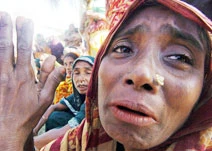
DHAKA/MAJHER CHAR, 20 November 2007 — Soldiers and relief workers raced yesterday to get aid to millions left destitute by the cyclone in Bangladesh, where the official death toll has topped 3,100 and is certain to rise.
Untold numbers of survivors were in urgent need of food and water in the south, one of the poorest areas of the world, which was battered by a colossal storm Thursday night that swept entire villages away.
The government called in the military to help but with roads blocked or simply gone, the relief effort was still struggling four days after disaster struck.
Homes, food stocks, crops, livestock and drinking water sources were all washed away by a six-meter (20-foot) tidal wave that smashed into the coast along with Cyclone Sidr. In many places the situation was desperate.
“Ninety-five percent of all the 40,000 houses in this sub-district have been washed away,” local administrator Salim Khan told AFP in the coastal town of Patharghata. Dozens of distraught villagers were outside his office pleading to be given food, water and medicines.
“People are hungry. Some supplies are going out but it is taking time,” he said.
The World Food Program said with most main roads now cleared, the aid effort was accelerating.
“Access is getting better every day,” said Douglas Casson Coutts, the World Food Program’s country representative.
“We have had to use boats to deliver food and it was possible to do it,” he said adding that he expected everyone in need would be reached within a few days.
But with the bloated corpses of people and animals dotting the landscape, and little left in the way of medical treatment, fears of disease added to the human misery across the region.
Officials said the armed forces were working to deliver relief by air, road and sea in conjunction with aid agencies. Many survivors, however, told AFP they still had not received any help. “There are many places that still have not been reached,” said navy Lt. Cmdr. Mohidul Hassan. With more than 3,100 confirmed dead, officials feared the toll could run into many thousands after victims in isolated areas were accounted for.
“It may cross 5,000, but it will remain below 10,000,” M. Abdur Rab, chairman of the Bangladeshi Red Crescent Society, said on Sunday. “There are many villages in remote areas, including on sandbank islands, that are yet to be reached,” said Heather Blackwell, the Bangladesh head of the British aid group Oxfam.
“We don’t know the losses sustained in those regions. It could take weeks before we know exactly how bad this cyclone was.” Along the coast, entire stretches of road were washed away, said an AFP reporter touring the worst-hit areas.
On one river island close to the southern coast, survivors said all except half a dozen of the island’s 70 children had been washed away in the tidal surge.
The rice harvest — or four months of food — had been washed away. Oxfam said it believed 50 to 95 percent of crops had been destroyed in coastal zones, and that this will have “immediate and long-term devastating effects.” Pope Benedict XVI appealed on Sunday for international solidarity to aid the Muslim nation, appealing to “help these brothers so sorely tried.” The United States said it was sending two million dollars for relief efforts. The most generous pledge has come from Saudi Arabia, which announced it was giving Bangladesh $100 million in emergency aid.
OIC Chief Expresses Grief
Secretary-General of the Organization of the Islamic Conference Ekmeleddin Ihsanoglu expressed grief and sorrow over the large-scale devastation caused by the cyclone. The OIC secretary-general appealed to member states, civil society and NGOs in Muslim countries to help the people of Bangladesh by providing them assistance — food, safe drinking water, emergency shelter, clothing and medicines.
He said the country was facing a daunting task in tiding over the crisis trigged by the powerful cyclone and should be provided all help.

