
WHEAT has been a staple of Middle Eastern life for some 10,000 years. The first evidence of its existence comes from Mesopotamia, the Levant and parts of modern-day Turkey. It originated as a wild grass in the valleys of the Tigris and Euphrates Rivers. The Egyptians were the first to make yeast-leavened breads in the years between 2,000- 3,000 BC. Since wheat was the only grain with sufficient gluten to make a raised or leavened loaf of bread, it rapidly became favored over other grains at the time, such as rice, oats, millet, and barley. It became so popular that the workers who built the pyramids were paid their salaries in bread.
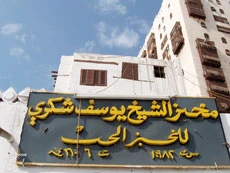
And it’s no wonder since it is worth its weight in gold. The health benefits of brown bread as opposed to white bread have been proven by numerous scientific and nutritional studies. One was carried out by Harvard University and included 75,000 nurses who were fed at least three servings of whole grain wheat bread every day. The study showed clearly that there was a 35% reduction in the risk of heart attacks, strokes, and diabetes among the nurses. Other beneficial substances in the bread include fiber, magnesium, vitamin B6 and E as well as zinc, folic acid and chromium. In the past — and today — the residents of the Kingdom and Jeddah can enjoy these numerous benefits thanks to one man, Yousef Shokri. He is responsible for establishing the first famous wheat bread bakery in Jeddah, some 77 years ago. Speaking to anyone who has lived in Jeddah for more than 50 years about what life was like when our modern cosmopolitan metropolis was a small seaport, you are sure to hear about the wonderful smells and aromas from Shokri’s Bakery. Arab News spoke to his son Mokhtar Yousef Shokri about how the idea for opening a bakery first took shape.
“It was my father’s idea of course, and the bakery is now owned by the third generation,” Shokri said. He explained that the recipe for wheat bread was derived from Turkish and Ottoman traditions, mixed with the local ideas and tastes. According to Shokri, the bakery caters to customers from all over the Kingdom and Middle East as well as special order clients from places such as Egypt and other parts of Africa.
“Many people who have visited Jeddah in the past have fallen in love with our bread and have made special arrangements for having it sent to their home countries,” he said, adding that the bakery supplies bread to many embassies and consulates. One of the bakery’s customers told Arab News, “Since my father was alive and we lived in Bab Makkah, we have always been loyal customers of Shokri’s Bakery,” said Omer Helmi Mohammad, a retired government employee. “Now my son makes special trips downtown every week to get the wheat bread.”
The Yousef Shokri Bakery currently produces from 2000-3000 pieces of their popular flat bread daily. As far as profits go, they are not high, according to Mokhtar Shokri who said, “We are simply keeping the bakery open in honor of our father’s name and his legacy.”
The secret to making the bread, he explained, is following the recipe that his father perfected — including the addition of certain unique ingredients, which he would not disclose. At one point, the bakery expanded into two branches, which then later closed, leaving the downtown branch the only one now in operation. “We have one worker in particular who has been with the business since its founding 77 years ago,” Shokri said. He went to say with pride, “We have always and will continue to make whole-wheat flat bread, or Shami, as long as our customers demand it.”
When asked if the bakery would be passed on to the next generation of Shokris he said,
“Yes, this has been our family way. We plan to continue the business and my father’s legacy into the next generation, God Willing,” he affirmed.