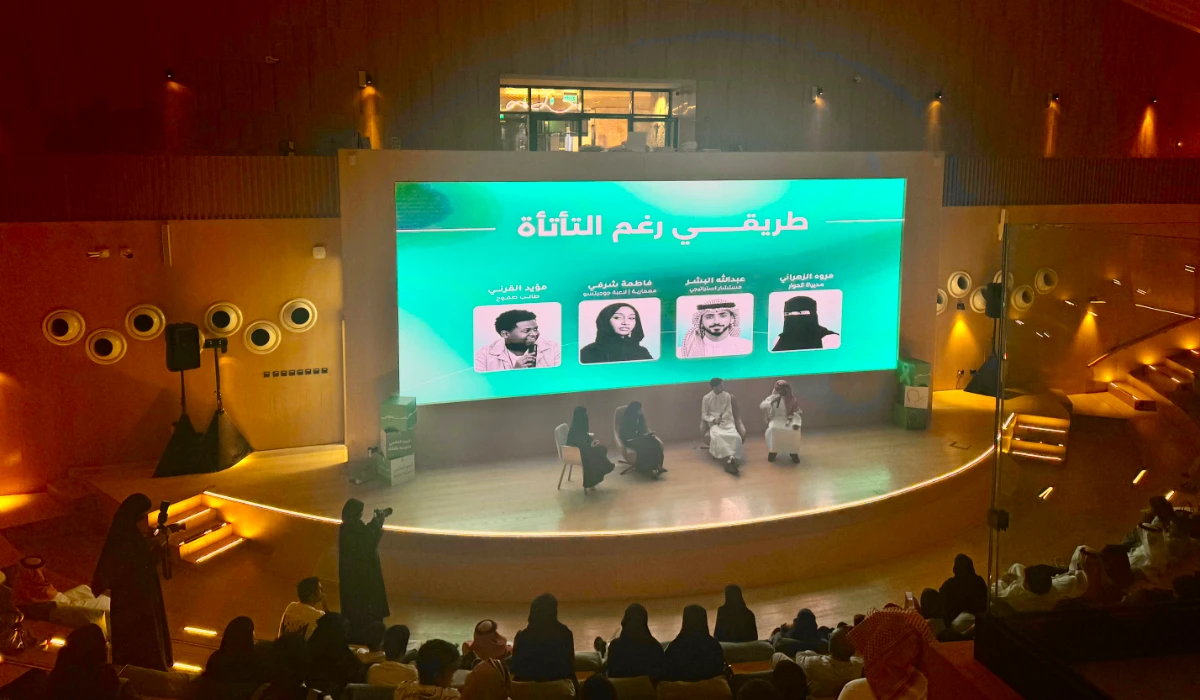
JEDDAH, 11 December 2007 — It was the celebration of the International Day for Disabled Persons that attracted people with different disabilities to Jeddah’s Disabled Children Association. The international awareness day was on Dec. 3 and on Thursday people without disabilities were given the chance to try out what it’s like to be in a wheelchair.
“I am glad that I took part in this meeting that gathered normal and disabled people,” said Ameen Abdo, one of the attendees who has poliomyelitis.
Abdo is a member in the Will Power Makers Committee for the physically disabled, part of the Jeddah Chamber of Commerce & Industry (JCCI), which was launched during the celebration.
“There are a lot of obstacles facing us as disabled people,” he said. “That was the base of the idea to form the committee. Through this committee we expressed our sufferings starting with lack of special paths and special car parking spaces. Even schools are not adjusted for us.”
Abdo works for Taiba Company for gold and jewelry in the checking department.
The message of the committee is to assimilate people with special needs in society. It includes education, employment and business management.
Abdullah Baneama, 34, who suffers from quadriplegia, is the honorary chief of the committee. He said he does not consider himself handicapped. As long as he has a healthy mind to think and a living heart, he could be creative. “A handicapped person is one whose mind and heart were blocked from worshiping God and achieve goals that would bring life to his country. Prince Sultan ibn Salman once said something that instilled courage and hope in me. He said that we are a people with special abilities, not a people with special needs,” Baneama said.
Baneama was an athlete and a professional swimmer before he had an accident jumping into the water when he was 19 and broke his neck. “I advise all people to appreciate their health and to know that they could not take it for granted.”
Samir Abdrabbu, a member in the committee, said that they are now finding support from each other as colleagues with similar disabilities. But they have not yet found the support they need from society.
“Most of us are unemployed and some of them have families and children they cannot support,” he said. “We lately gave the Jeddah municipality a list of 174 important locations that must be modified for people with special needs,” he added.
Disabled children with their families were also present at the event. Asrar, 11, in a wheelchair due to a spinal injury, attended this celebration for the first time.
“I obtained a permission from the late King Fahd — because we are Yemenis — to undergo an operation (for Asrar) at King Fahd General Hospital. The hospital issued a medical report that she needs to be transferred to an advanced hospital to do another operation and needs to be treated in Germany,” said Ali Al-Hassani, Asrar’s father. “The girl has suffered a lot during all these years and her mother also. I still have no sponsor to go to Germany to end this little girl’s misery.”
Mai, 18, was sitting on her wheelchair watching television. “We do not know what the real problem is. One of the hospitals said she needs rehabilitation using special machines and there is hope. She needs to learn in special centers but we cannot afford them. We are living on a pension,” said Mizna, Mai’s mother.
As part of the celebration, the Harley Owners’ Group-Jeddah Chapter came to the location and had disabled children riding with them. Other young children were excited and came along. The group has donated 30 wheelchairs and over 500 boxes of adult diapers.