MAKKAH, 12 December 2007 — A special brigade of security forces under the command of Col. Salem Al-Mudhhib will be posted on the Jamrat Bridge to help control the crowd of millions of pilgrims that will be rushing through the devil-stoning points on the three days starting Dec. 19.
The crowd-control brigade will be dispatched to four zones at the sprawling Jamrat Bridge complex.
According to the colonel, the four zones will be: “Jamrat Square, the stoning decks, the entry point from Mina and the entry point from Makkah. Each of these zones is strategic and sensitive and warrants close and constant observation day and night.”
The colonel also said that contingency plans and first-responders have been organized to confront any issues, including weather-related problems, such as flash floods or heavy winds.
“We have taken special care to make all of our strategies flexible; it’s the ever-changing situation (during the Haj) that will determine our next move,” he said. “Support units will be in a constant state of alert to respond when the need arises.”
The official also said that a number of meetings and workshops on crowd management were held to analyze public safety measures and address issues that arose during the last Haj when new crowd-control measures were highly visible.
“In these workshops and meetings we closely analyzed our experiences and observations in the last season,” he said. “We gave special attention to the difficulties and negative developments countered in past Haj operations and devised the ways to overcome them.”
The heightened efforts during the last Haj came after the January 2006 stampede of pilgrims at the Jamrat Bridge led to the death of 346 pilgrims. The stampede was blamed on vendors crowding the Jamrat passageways and pilgrims that came to the stoning rite burdened down with their personal belongings from breaking camps prior to the stoning rather than afterward.
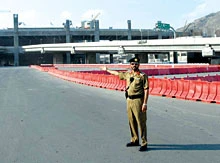
Starting last year, security details established “overflow zones” surrounded by police and marked off with orange cones, empty spaces where pilgrims were not allowed to traverse in the event they were needed to avert fatal crushes. Vendors were also chased away from passageways to avoid bottlenecking.
The ministries of Haj, Municipal and Rural Affairs, Health and the Interior are coordinating efforts to make this year’s Haj safe and incident-free. The Saudi Red Crescent Society and the Institute for Haj Research are also involved.
The security forces commander said the men that will be engaged in public safety measures on the street have run through a series of mock drills to observe their readiness to respond to possible situations that could arise at the Jamrat.
“These programs are basically aimed at each soldier to get an idea of the duties he is supposed to do, including the transfer of the accident victims to the health centers,” he said. “The mock drills also develop a spirit of coordination among various departments working at the Jamrat.”
Huge screens have been set up at entry points to display safety procedures to be followed at the bridge while proceeding to the throwing points. Such messages have also been displayed on closed-circuit television screens at the tents.
Arrangements to send Bluetooth messages are in place. Printed materials in 13 languages containing important instructions on how to behave on the bridges will also be distributed to the pilgrims.
Recent renovations and expansions of the Jamrat area are expected to ease crowding that has proved fatal in the past.
Mudhhib warned, however, that explosive crowd situations could arise unless pilgrims arrive in phases instead of converging in overwhelming numbers at the same time. “Excited and impatient pilgrims pose the biggest threat at the bridge,” he said. “They rush forward disrupting the peaceful and planned movement of other pilgrims. The presence of the old people and children further confounds the situation.”