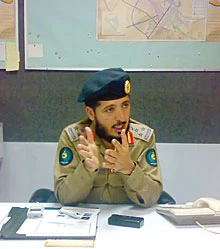
MAKKAH, 16 December 2007 — The Civil Defense would respond to emergencies in Makkah and the holy sites on the basis of the data gathered with the help of the latest technology, said Brig. Muhammad ibn Abdullah Al-Qarni, director of the operations center at the Haj Civil Defense, in an interview with Arab News yesterday.
“The operations center receives detailed reports from different zones in Makkah and the holy sites. It records all accidents and sends Civil Defense units and support teams in sufficient numbers to the accident spots,” Al-Qarni said.
The operations center gathers information with the help of a large number of surveillance cameras, which instantly transfer the data to the center. The monitoring personnel posted on observation towers also send reports on any development of critical nature, Al-Qarni said.
The center employs advanced techniques, such as GIS (Geospatial Information System), which is capable of integrating, storing, editing, analyzing, sharing and displaying geographically referenced information. GIS allows emergency planners to easily calculate emergency-response times in the event of a natural disaster.
Al-Qarni said three new dams built in the holy sites would check flash floods in the event of heavy rains. “At the same time, the Civil Defense engineers, who are also tasked with the maintenance of the dams, would ensure that water in the dams do not reach dangerous levels.”
He said that the mammoth crowds at the holy sites could be controlled with the help of numerous patrol teams and constant monitoring of pilgrim traffic.
“Data from previous years help us identify potential locations where unusual crowds would be gathering. We have posted special units at all vulnerable locations. Support teams are ready to take the place of any unit that has been caught in the midst of heavy crowds,” the official said.
Al-Qarni said the recently completed buildings in Mina and the Jamrat area are provided with adequate security arrangements, including a centralized warning system in cases of emergencies. “The Civil Defense is equipped to counter any accident in the buildings though some of them are 10 stories high,” he said.
He added that the monitoring devices at the Jamrat Bridge continuously send photographs to the Civil Defense operations room. Announcements would be made on microphones on what pilgrims should do during emergencies. Text messages would also be sent in situations that require the immediate attention of pilgrims.
The Civil Defense will stop the traffic and pedestrian movement in tunnels during emergencies. The pedestrians who take the tunnel roads meant exclusively for vehicles may sometimes experience breathing difficulties or fall unconscious. There are Civil Defense units to take care of such cases. There are also units that regularly check the level of air pollution in tunnels. If the pollution did not fall to the desired levels the tunnel would be closed until the air is purified.
The civil protection units will take necessary steps for the purification of the air. In pollution-related accidents, the Civil Defense personnel give the first aid to the victims and rush them to hospital.