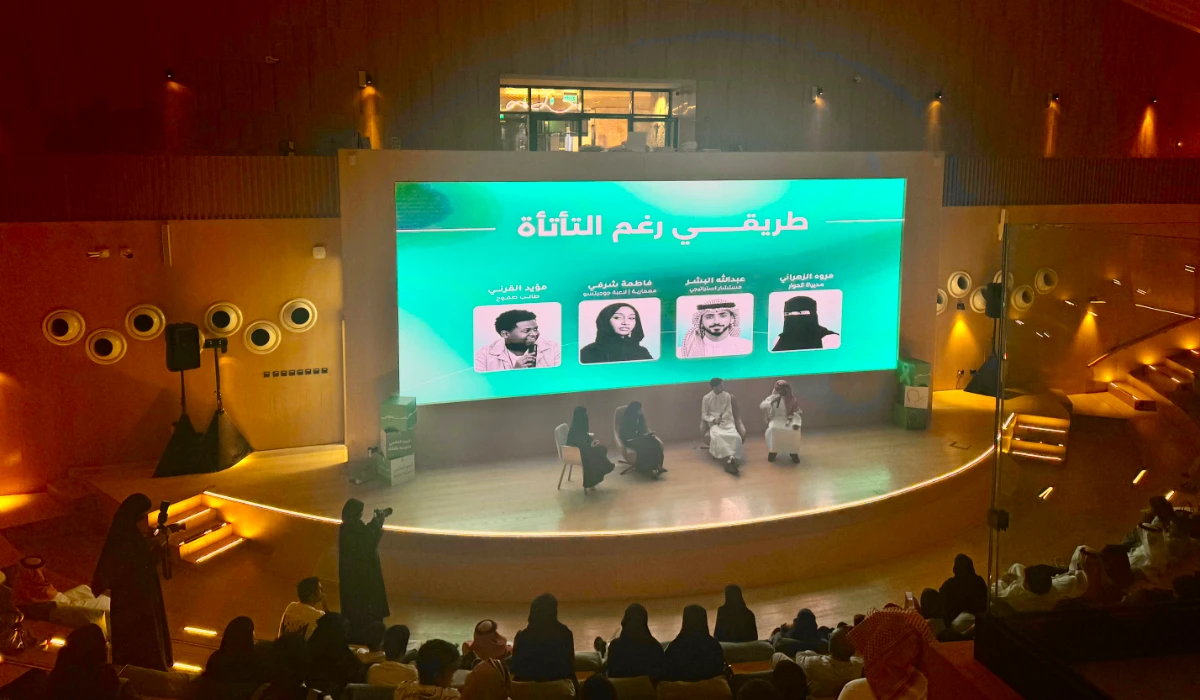
RIYADH — Saudi society has broken taboos of the past when men and women opened their hearts and minds to discuss issues that relate to social development in a no-holds barred environment, a group of Saudis at the King Abdul Aziz Center for National Dialogue told a visiting delegation of British parliamentarians.
The delegation, which arrived in the Kingdom on Friday, visited the center and met with its Secretary-General Faisal ibn Muammar and representatives of several public institutions, as part of its tour of Saudi Arabia.
The delegation comprised Daniel Kawezynski, David Lidington, Tobias Ellwood, Keith Simpson, David Wilshire, Chris Doyle and Laura Hutchings. They were briefed about the dialogue center’s mission in the Kingdom and the progress it achieved.
Ibn Muammar explained to the delegation that the idea behind establishing national forums for dialogue, which was called for by Custodian of the Two Holy Mosques King Abdullah as part of his vision for political and economic reforms in the country, was to get local people express their views about crucial topics related to the Kingdom’s development goals.
He also said that among the strengths that the Kingdom enjoys today is its stable leadership, it being the cradle of Islam, its economic weight in the region and the world at large, and the unity of its people.
“The idea is to gather public opinion about various topics. We are also trying to expand the culture of dialogue in society,” Ibn Muammar told the delegation members.
“The ideas expressed at the forums are taken up with decision makers and are then followed up,” he continued.
Ehsan Abu Huleiga, a member of the Shoura Council, told the delegation that the concept of Saudis talking about topics that were previously considered taboo was phenomenal.
“What we are witnessing is a phenomenon, believe it or not,” said Abu Huleiga, who was a participant at the first National Forum for Dialogue. “People were actually raising the question: ‘Are we going to really dismantle taboos in the discussions?’ And this was evident since the very beginning.”
He explained how the national forums were successful in bringing Saudis from different social strata and different Islamic schools of thought together to discuss in harmony vital issues related to national development.
“At first, they tried to avoid each other. Later on they were debating issues and at the end of the forum they were seen hugging one another,” he said.
As a result, he said, Saudi society is opening up and accepting the fact that differences can be sorted out in a healthy environment within the framework of national unity.
Lidington said he welcomed the fact that Saudis are now talking about social issues candidly.
The British lawmaker also expressed his hope that the National Forum for Dialogue would expand to include representatives of other faiths and communities living in the Kingdom.
Among the issues raised by the British delegation was the ban on women driving.
Ibn Muammar explained to the delegation that the ban on women driving was not the result of a religious fatwa, but rather society’s refusal to accept the idea.
“It’s a social issue, not a religious one,” he said. “Society will determine if women are to drive or not.”
Ibn Muammar lauded the role played by Saudi women in all national forums for dialogue since the very beginning, saying that their participation was vital and it was based on the principle of sharing equal responsibility between men and women with regard to national issues.
The national dialogue is a semi-annual forum that brings together government officials, nongovernmental organizations and citizens to address to discuss Saudi policies and future strategies for social development. Past dialogues have addressed topics such as Saudis’ relations with outsiders, women’s empowerment and religious extremism.
King Abdullah set up King Abdul Aziz Center for National Dialogue in August 2003, when he was the crown prince, as part of political and social reforms that he spearheaded.
The center aims at promoting a culture of dialogue among Saudi intellectuals and youth.