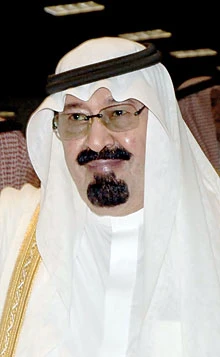
JEDDAH: Saudi Arabia marks today the third anniversary of Custodian of the Two Holy Mosques King Abdullah’s ascending to the throne. During the last three years, the Kingdom has achieved unprecedented progress in economic, social, educational, health, agricultural and industrial sectors.
Abdullah, who became king on Aug. 1, 2005, (Jamad Al-Thani 26, 1426), brought about remarkable changes in the administration, realizing the hopes and aspirations of both Saudis and expatriates. He has been successful in enhancing Saudi Arabia’s global standing by building strong relations with influential countries and through his balanced policies.
The international energy conference in Jeddah, the launch of King Abdullah University of Science and Technology at Thuwal near Jeddah, the call for an interfaith dialogue between Muslims, Christians, Jews and adherents of other faiths, and the opening of welfare projects worth nearly SR200 billion were some of the king’s major achievements last year. He also won the International King Faisal Prize for Service to Islam.
The mega economic cities in Rabigh, Hail, Madinah and Jizan, which are expected to draw SR300 billion investments and create more than a million jobs, are King Abdullah’s pet projects.
The king visited different parts of the Kingdom to acquaint himself with the condition of his people and their development needs. He took time to visit many important countries in the East and West to promote economic and political ties.
The king used his meetings with world leaders to mobilize support for Arab and Islamic causes. The Arab peace plan, which was originally proposed by Abdullah when he was crown prince, has won international acclaim.
Like his predecessors, King Abdullah has shown special interest in the care and development of the two holy mosques. He allocated SR10 billion for the expansion of the Grand Mosque in Makkah and the holy sites. A new expansion project is being carried out at the Prophet’s Mosque in Madinah at a cost of SR4 billion.
Efforts for the empowerment of women received a shot in the arm during Abdullah’s rule. He promoted a culture of dialogue in the country by setting up the King Abdul Aziz Center for National Dialogue, which organized forums to discuss issues related to women, education, labor and reforms.
King Abdullah is a man of mission and great ideals. “Our Islamic method makes it binding on us to spread justice among people without any distinction between strong and weak. All should be given their due rights. We will not keep back anyone’s rights and all people are equal. Nobody becomes great except by his actions and none becomes small but by his crime,” he said while opening the annual Shoura Council session this year.