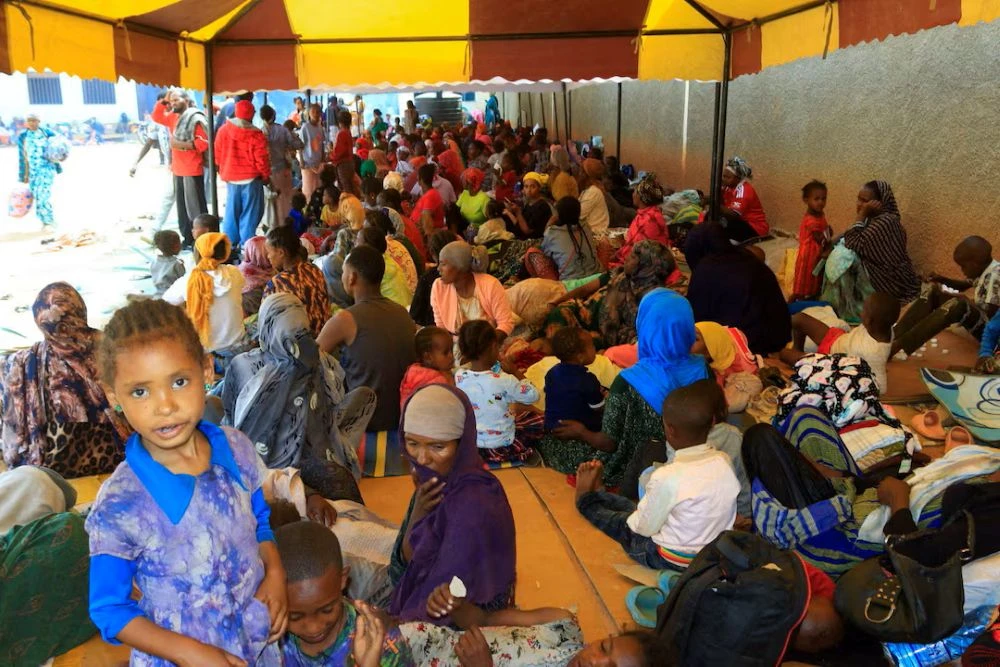
BAGHDAD: Levels of violence in their home country may be falling steadily, but for hundreds of thousands of Iraqi refugees living in neighboring countries it is still too early to risk returning.
For the risks are indeed great. They fear a further outbreak of the vicious sectarian violence that swept the country in the wake of the March 2003 US-led invasion that toppled Saddam Hussein.
Refugees who found shelter in Jordan and Syria also fear returning to find their homes either destroyed or occupied by someone else. And they fear not being able to get out again if they do go home and things get worse. So prudence is the watchword for now, and exile the safer option.
“My family is still in Jordan and I think I will not bring them back before six months,” Iraqi businessman Ammar Orfali told AFP in Baghdad. He sent his family away but did not leave himself, as he works for the US military.
“They are my loves: I’m not willing to take any risk. My children are going to school in Amman. I want to be 100 percent sure that it’s safe before bringing them back.” Since the invasion five years ago, a flood of more than two million people surged to safety beyond war-ravaged Iraq’s borders.
The UN said around 1.5 million sought refuge in Syria and around half a million in Jordan. Returnees are generally people with no other choice, according to the Damascus-based Peter Harling of the International Crisis Group, co-author of a recent report on Iraqi refugees. “Only those who no longer have the means to survive in Syria are going back,” he said.
“The great majority remain cautious, and those who can stay here or in Jordan do so while waiting to see how the situation evolves.” Statistics from the Iraqi ministry for migrants and the displaced show that some 8,000 Iraqis have returned from abroad since the beginning of the year.
United Nations High Commissioner for Refugees (UNHCR) figures show that during October just 280 refugees returned home, among them 125 from Syria and 103 from Jordan.
Convoys of returning Iraqis leave Amman once or twice a month, but the chance to go home rarely attracts more than a few dozen people. The most recent convoy arrived on Sunday in Baghdad and comprised 91 refugees, the UNHCR said. “The number is relatively limited,” said the UNHCR’s Andrew Harper in Geneva. “More internally displaced people are coming back, because their situation is much more desperate.”
“Refugees from abroad are more reluctant to come back, because they are afraid not to be able to leave again if needed, if the situation deteriorates again.”