KABUL: US President George W. Bush made a surprise farewell visit yesterday to Afghanistan, where he warned of a long struggle ahead to restore stability seven years after ordering troops into the country.
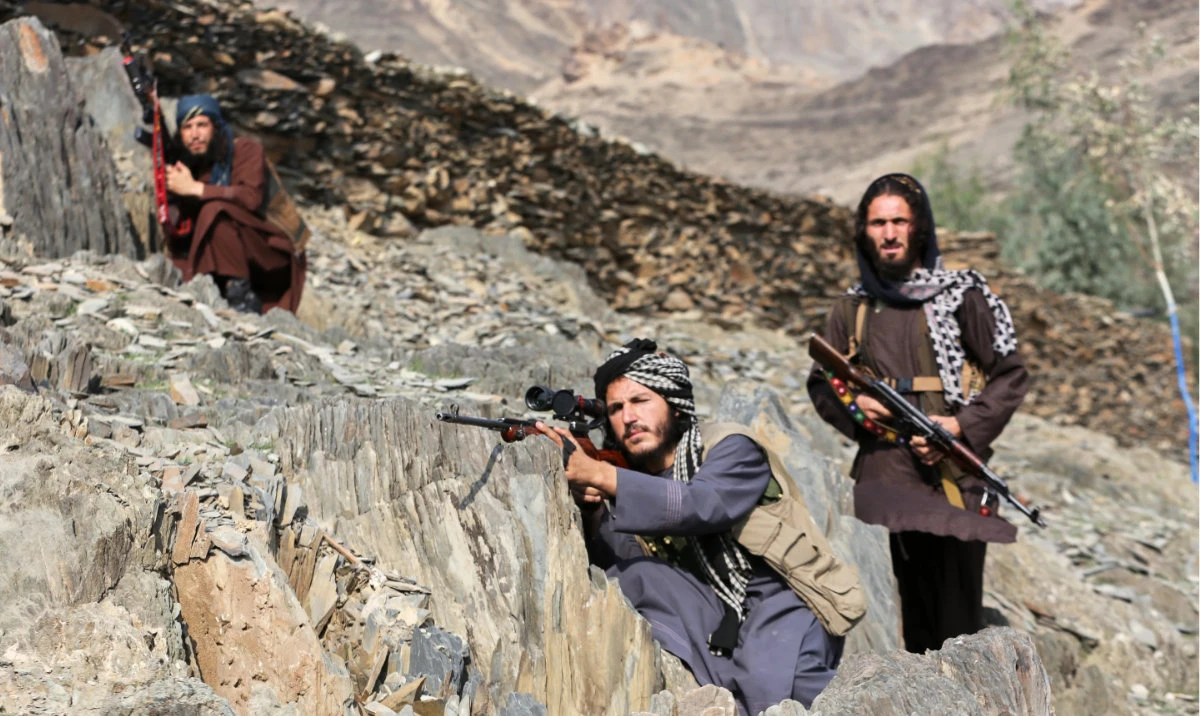
An Afghan official says a joint Afghan-NATO operation in the country’s south has killed 40 Taleban militants.
Helmand Gov. spokesman Dawood Ahmadi says the operation in the Nad Ali and Murja regions of Helmand began last Thursday and is still ongoing. He says 40 militants have died in the operation, though he says government officials had recovered only seven bodies. Bush landed in predawn darkness after an equally secretive stop in Iraq, where an angry Iraqi reporter threw two shoes at him in a powerfully symbolic indication of lingering hostility there toward the outgoing US leader.
The president’s visit to the two countries which will arguably most define his legacy comes just over a month before he hands the keys of the White House to his successor Barack Obama on Jan. 20.
Bush landed at Bagram Air Base near Kabul, virtually all lights on his Air Force One official plane turned off as part of a thick shroud of secrecy to ensure his safety. After addressing US troops at the base, he flew by Blackhawk helicopter to Kabul for talks with Afghan President Hamid Karzai.
Bush acknowledged the difficulty of restoring peace to Afghanistan, where 70,000 foreign troops are fighting an insurgency that has grown increasingly violent since a US-led coalition ousted the hard-line Taleban regime in 2001.
“This is going to be a long struggle,” he told a joint news conference with Karzai at the presidential palace. “Ideological struggles take time.” “Are there difficult days ahead?” he asked.
“Absolutely. But are the conditions a lot better today in Afghanistan than they were in 2001? Unquestionably, undoubtedly they’re better.”
This year has been the bloodiest for foreign forces here since the Taleban fell, and Gen. David McKiernan, the top commander, has asked for more than 20,000 extra US soldiers to counter rising violence.
Karzai said Afghanistan was grateful for the help, saying its people “don’t want to be a burden on the international community for ever.” Asked about a possible timetable for a withdrawal of foreign troops, Karzai indicated now was not the time to talk about pulling out.
“Afghanistan will not allow the international community leaving before we are fully on our feet, before we are strong enough to defend our country, before we are powerful enough to have a good economy,” he said, joking “and before we have taken from President Bush and the next administration billions and billions of more dollars. No way!”
Bush left the country shortly after the press conference. Earlier, the US leader warned that the ramp-up in troop levels would inevitably lead to increased violence.
“You’ll see violence tick up,” he told reporters on Air Force One en route here, drawing a comparison with the “surge” that helped bring violence down in Iraq and paved the way for some progress toward political reconciliation.
“The degree of difficulty in Afghanistan is high,” he said.