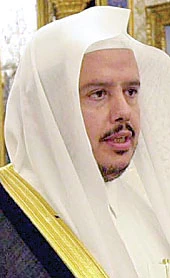
JEDDAH: Justice Minister Abdullah Al-Asheikh said yesterday that his ministry was studying alternative punishments to imprisonment, in association with other government departments and agencies.
“We have already distributed questionnaires among judges to gather their ideas and proposals on alternative punishments. Many judges favor the idea saying it would contribute to reforming the accused,” he said.
Speaking to Al-Watan newspaper, the minister said the prospect of allowing women in legal practice was still being studied. “The new law related to legal practice and judicial procedures allows women to take up their cases and attend court proceedings,” he added.
Al-Asheikh said his ministry would prepare a 20-year strategic plan to address present and future challenges. The strategy, which aims at upgrading judicial facilities, will present a futuristic vision, including standards to assess performance.
“We’ll have a five-year executive plan to achieve long-term goals. It will set out a mechanism to review performance and promote a culture of strategic planning and thinking,” he said. He emphasized the ministry’s plan to train more judges to meet growing requirements.
Al-Asheikh disclosed the ministry’s plan to issue a real estate mortgage law as quickly as possible. “We have set up a committee of experts to study all aspects of the law and the draft law has been presented to the Shoura Council for approval,” he explained.
He stressed the independence of the Saudi judicial system and said it was based on the Qur’an and Sunnah. He advised the media against creating confusion and suspicion in the minds of the public about the judiciary and judges.
Asked why the ministry was not implementing the new Criminal Procedures Law, he said the law required executive bylaws for implementation. “We have now prepared the executive bylaws. However, its implementation will take some time.” He said the ministry required more judicial and administrative staff to implement the new laws.
“The new Judiciary Law and Court of Grievances Law were prepared with utmost care and will bring about qualitative changes in the Kingdom’s judicial system,” said Al-Asheikh.
Abdul Mohsen Al-Obaikan, a legal consultant and member of the Shoura Council, said the new system would bring about a total change in the judicial system. “The establishment of specialized courts for dealing with personal, trade and labor disputes is a very good thing and will speed up settlement of such disputes,” he said.
Eighteen new projects are being implemented to improve judicial facilities across the country. They include a new court in Khamis Mushayt, a legal complex in Arar, new courts and notary public buildings in Sulail, Turba, Qassim, Dammam and Jizan, new building for Jeddah High Court, a summary court in Qassim and a legal complex in Sakaka.