
JEDDAH: Ernst & Young, one of the world’s leading professional services organizations, hosted a seminar on Saudi Arabia’s new corporate income tax law and its bye-laws here yesterday.
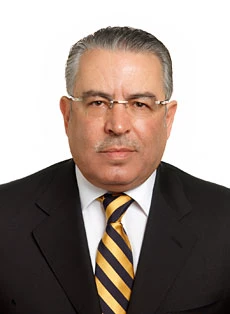
The seminar, organized by Sami E. Farah, managing partner of Ernst & Young Jeddah, was held at the Jeddah Hilton. It emphasized the update on corporate income tax and withholding tax in accordance with the new tax law and its bye-laws as well as clarifications issued by the Department of Zakah and Income Tax (DZIT) applicable to all Saudi businesses.
The main objective of the seminar was to update and enhance knowledge and understanding of the new Saudi income tax law and zakah regulations and tax treaties, particularly provisions of double tax treaties recently signed by Saudi Arabia.
“Saudi Arabia has signed many tax treaties for example with Austria, China, India, Malaysia, Italy, South Africa, Turkey, the UK, Pakistan and others.
“Saudi Arabia so far signed about 20 tax treaties out of which seven have come into force. The remaining tax treaties are not yet ratified,”
Mohammed Saleem Desin of Ernst & Young Jeddah said in his presentation on tax treaties developments during 2008. “Our clients understand the value of our commitment to service and we are proud to have provided professional tax and zakah services to a wide range of clients including large multinational corporations and Saudi business groups which have complete confidence in out professionalism and in our dedication to total quality service,” Desin added.
About 125 executives, prominent bankers and accountants attended yesterday’s seminar which dealt with the update on recent developments on zakah matters as well as other business regulations. Recent appeal decisions, treatment of certain matters on tax issues and proposed amendments to Saudi Companies Regulations were also discussed during the seminar.
The seminar also focused on tax implications on purchase of services and software from abroad and GOSI (General Organization of Social Insurance) regulations and deductible employees’ costs and amendments in the companies regulations.
Mohammed K. Yaghmour of Ernst & Young Jeddah presented updates on new zakah fatwas and regulations on zakah matters.
Irfan Alladin of Ernst & Young Jeddah, gave an update on rulings issued by appeals committees and Board of Grievance (BOG).
The seminar also dealt with global risk matters and opportunities available due to the change in economic circumstances worldwide and how the companies are managing the risks in these circumstances.
Ernst & Young is also conducting seminars in Alkhobar, Riyadh and Bahrain and it is estimated that more than 500 prominent bankers and accountants will attend the seminars. Ernst & Young, previously known as Whinney Murray & Co., has the Kingdom’s longest established tax and zakah practice, having had a permanent office in the Kingdom since 1967.
Currency, tax and zakah practice comprise over 80 tax and zakah professionals in three offices, under the direction of dedicated tax and zakah specialists.
“Our tax and zakah specialists are actively involved in providing advice to existing and potential clients on various new regulations, including the new income tax law and provisions of tax treaties recently being signed by Saudi Arabia,” Desin said.
The Saudi offices form part of Ernst & Young’s Middle East practice, with nearly 2,900 professionals in 17 offices throughout the region. Their Middle East practice is a member of Ernst & Young Global, operating with more than 700 offices in 140 countries with over 130,000 professionals worldwide.