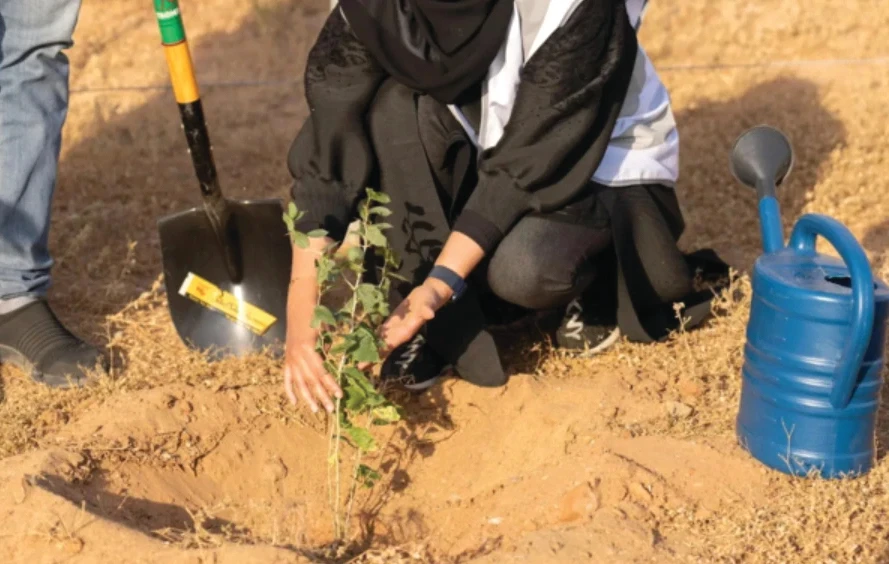
JEDDAH: In two years, students of Dar Al-Hekma College (DAH) invested 19,141 hours of their time involved in activities to serve society.
The college celebrated yesterday the work of 500 socially responsible students by organizing the first social responsibility forum entitled “We are all responsible ... we are all for society”.
“Students have to complete 100 credit hours of social responsibility to graduate,” said the dean of DAH, Suhair H. Al-Qurashi. “Dar Al-Hekma believes in enhancing a sense of social responsibility among its students.”
In 2007, 10 nursing students volunteered to help in the emergency room of King Faisal Specialist Hospital during the Haj season.
In 2008, five students of the same department volunteered to vaccinate children as part of the poliomyelitis vaccination campaign. Twenty management information system students worked on the marketing plan for Bab Rizq, a job creation center for women under Abdul Latif Jameel Community Services Programs. These were just a few examples of the projects the students took part in.
Fawwaz Nawwab, president and CEO of the Saudi Aramco Mobil Refinery Company (SAMREF), shared the company’s experience in introducing corporate social responsibility (CSR) into their work environment.
“Who is responsible for developing society? The government? The ministries? The scholars?” asked Nawwab. “Everyone is responsible.”
SAMREF established its CSR division in 2008. Its aim is to help young people discover their potentials and talents, and create more awareness on social, cultural, economic and educational levels among all social classes.
“It’s very easy to donate money, but it’s no longer enough,” he added, explaining the different programs that SAMREF offers to society. In terms of education, there are four main programs that target girls and boys between the ages of 6 and 24: the English language development program, the library program, the leadership and excellence program and a program to support the educational sector.
DAH interior designer graduates presented their social responsibility contributions.
Mea’ad Al-Aboud, who exceeded the 100 credit hours of social responsibility by 900 hours, designed a Saudi social responsibility organization.
“I discovered that there’s more to life than success,” she said. “It’s loving one’s society and feeling responsible toward it.”
She was inspired to create a melting pot where contributors, volunteers, organizers and consumers meet for social responsibility projects that concern their society.
“The organization is to encourage institutions and individuals to participate in corporate social responsibility,” said Al-Aboud.
Abdul Aziz Al-Khudairy, the deputy governor of Makkah province, gave the final speech and emphasized the importance of CSR in our daily social work.
“Social responsibility has become the most basic part of our daily social work. We have to understand it in-depth,” said Al-Khudairy. “I believe in our future generation. They will introduce a unique model of CSR.”