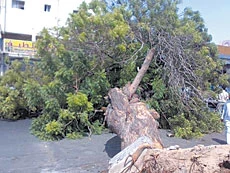
JEDDAH: It was a sad day in Al-Ruwais, south of Jeddah, when its oldest neem (margosa) tree fell down all by itself. It was called Sumayah tree, named after a nearby grocery shop — one of the oldest in Jeddah. Within a week after the tree fell, the municipality sliced it into pieces and cleared the area.
Trees do not usually live long in Jeddah because they have no deep roots, which is why many residents expressed sorrow at the sudden loss of the landmark tree in their area.
“The tree was more than 35 years old. It survived many attempts to cut it down, including the asphalting of the road near the area it stood and the desire of the shop owners who said young men used to sit under its shade and annoy shoppers, especially women,” said Muhammad Ali, one of the oldest residents in Al-Ruwais. A few weeks ago, without any signs of sickness usually shown by such trees at the end of their age, the tree fell down. It still had green leaves.
The origin of the neem tree goes back to South Asia. It was introduced by Indian immigrants to Africa at the end of the 19th century. It is now successfully grown in tropical areas as well as in the Middle East and Latin America.
According to history books, India was the original home of the neem tree where it is considered a medicinal tree. Even in her fall, the Sumayah tree was generous to the residents. Its fall did not cause any damage except the temporary closure of the main road. The residents bid the tree farewell by taking photos. Abu Abdul Aziz, who was saddened by the unexpected loss of the tree, urged the Jeddah municipality to give more attention to trees and plants.
According to historians, Jeddah had a single neem tree in 1947 in front of Naseef’s house in downtown Jeddah. Some visitors going to Madinah through Jeddah wrote in their memoirs that they used to meet under this tree after they finished their tour of the market.