THUWAL, Jeddah: King Abdullah University of Science and Technology (KAUST) is the biggest and the most prestigious educational project ever undertaken in the Kingdom. When Custodian of the Two Holy Mosques King Abdullah opens the doors of what is being described as the new Bait Al-Hikma or the House of Wisdom, on Wednesday, it will herald the beginning of a bright new chapter in the world of scientific research.
King Abdullah speaks of the new university as his dream project. “I have been thinking and dreaming about it for the last 25 years,” the king has said many times. Several heads of state and prominent international personalities will attend the opening.
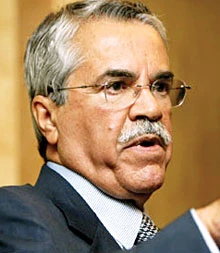
Petroleum and Mineral Resources Minister Ali Al-Naimi, who is the chairman of KAUST’s Board of Trustees, said: “According to the king’s vision, KAUST will herald a new era of scientific and economic progress in the Kingdom. It will also increase the contributions of Arabs and Muslims to human civilization.”
Al-Naimi highlighted the university’s great scientific objectives, adding that tremendous efforts were required to make them a reality. He noted the interest shown by King Abdullah in KAUST during his visits to the facility while it was under construction. “He would ask about everything, small and large, related to the university, the syllabus, buildings and facilities. That showed how eager he was to make KAUST a new Arab house of knowledge,” the minister said.
The university’s working team built a campus, prepared a syllabus and research projects within two years from King Abdullah’s laying the foundation. About 400 students from Saudi Arabia, the US, UK and other parts of the world began their studies at the university on Sept. 5.
The university’s Board of Trustees includes prominent personalities and academics from Saudi Arabia and abroad. It has already established links with several international universities as well as local and international companies and industries.
Al-Naimi said KAUST would boost the Kingdom’s scientific and economic progress, adding that Saudi research and academic centers would benefit from its advanced research facilities. Students from different parts of the world will be selected based on their merits, academic achievements and intellectual capabilities. “At present there are about 100 Saudi students in the university and we hope that number will increase in the future,” he added.
Al-Naimi said: “The university’s research will focus on developing new sources of energy in the Kingdom.” It will also focus on the development of new crops to be cultivated in hot and arid lands and finally, the optimum utilization of the marine environment, he added.
King Abdullah gave the Kingdom’s oil giant Saudi Aramco the task of establishing the university. Khalid Al-Falih, president and CEO of the company, said KAUST would make knowledge the third vital driving force in the Kingdom after oil and industry. He said it was a big challenge for the company to prepare the university’s academic and research programs and to match 21st century standards.
Al-Falih said his company had the privilege of seeing the king’s dream become a reality. “Since its beginning, Saudi Aramco has had a clear idea for the Kingdom’s development, depending on the national manpower resources and the achievement of qualitative progress in all walks of its life.”
The establishment of the new university with a $10 billion endowment has created huge excitement in the world academic community. Expectations are naturally very high. While academics beyond the Kingdom’s borders are excited about the huge opportunities the new university will offer scientific researchers, within the Kingdom there is a talk of the new university ushering in a new era of educational freedom.
Saudi university professors and teachers are waiting to see how the new university will impact on Saudi society and the student community. Many Saudi academics feel KAUST will force other universities to raise the standard of education so that their students can gain admittance.
At Thuwal on Monday, the final touches were being given to the hall where the inauguration will take place. What was only three years ago a sleepy village on the Red Sea coast is now on the world map. Gleaming buildings shimmered in the afternoon sun. Members of world media organizations are already in Jeddah and they have been taken to see the innovative new campus.
Security was tight and policemen were busy carrying out security checks on all roads leading to the university. Sniffer dogs were also pressed into service.
Professor Choon Fong Shih, president of KAUST, who in his 11 years at the National University of Singapore (NUS) — the last eight as president — has played a critical role in building both the university’s and Singapore’s capacity and reputation as a global research leader, said: “We have no choice but to think global and be global. In Singapore, we are globally oriented because there is neither retreat nor hinterland.”
He also said, “In the global economy, small means you have to be focused and nimble; find a niche and work with partners.”
He has noted that KAUST is not going to “try to be world class in 100 different areas ... (but) we are sufficiently focused and funded to achieve global excellence in some areas.”
Shih said: “In my life, I have been honored, not once, but twice, in helping to build a world-class university. The first time was in the mid-1990s, when I was called from my quiet researcher’s life at Brown University in the US, where I had spent 30 years, to return to my native Singapore and become the founding director of a national research institute and eventually, the president of the National University of Singapore (NUS) and to help transform the latter from a great teaching institution to a world-class research university with links to other research universities around the world. Over the past 11 years, I have been privileged to work with some extraordinary people in Singapore and from all over the world, in order to fulfill the vision of the leaders and people of Singapore for a world-class research university. Now for the second time, I am called to help build a world-class research university for the 21st century.”
He went on to say, “While this enterprise is far from my home, it is close to my heart. I am honored and privileged to be part of building what King Abdullah has called a new house of wisdom, a forum for science and research, and a beacon of knowledge for future generations. At the heart of KAUST is an enlightened Islamic spirit, a spirit that loves knowledge not only for its own sake but also for its promise to better the human condition.”