TEHRAN: A leading Iranian nuclear scientist was murdered in Tehran on Tuesday in a rare bomb attack that the government quickly blamed on “mercenaries” in the pay of archfoes the United States and Israel. The killing in broad daylight comes amid an increasingly bitter standoff between Iran and world powers over Tehran’s controversial nuclear drive.
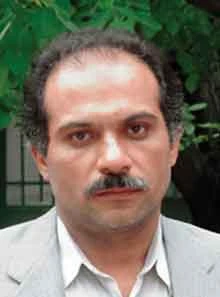
Massoud Ali Mohammadi, a particle physics professor at prestigious Tehran University, died when a bomb strapped to a motorcycle was triggered by remote control outside his home in northern Tehran as he was getting into a car on his way to work. The government blamed the rare assassination on an armed Iranian opposition group that it said operated under the direction of Israel and the US.
The United States dismissed the allegations out of hand. “Charges of US involvement are absurd,” State Department spokesman Mark Toner said in Washington.
Tehran’s chief prosecutor also implicated the United States and Israel, saying their respective intelligence services were likely behind the attack. “Given the fact that Massoud Ali Mohammadi was a nuclear scientist, the CIA and Mossad agents most likely have had a hand in it,” Abbas Jafari Dolatabadi told the state broadcaster’s news service.
Tehran University’s Basij militia said Ali Mohammadi’s name had been included on an international blacklist linked to Iran’s atomic drive. Iran’s main opposition movement-in-exile dismissed as a “total lie” the accusations of its involvement in the attack. “The NCRI has no connection with this murder,” said a spokesman for the National Council of Resistance of Iran, which includes the People’s Mujahideen of Iran, a banned armed group.
Ali Shirzadian, a spokesman for Iran’s Atomic Energy Organization, said Ali Mohammadi “did not have any cooperation (work) with the organization and therefore he had not played a role in the Atomic Energy Organization’s activities.”
A Western physics professor said a list of Ali Mohammadi’s publications on Tehran University’s website suggested his specialization was theoretical particle physics, not nuclear energy.
State broadcaster IRIB described him as a “committed and revolutionary” professor, suggesting he backed the government of President Mahmoud Ahmadinejad. Fars quoted one of his students as saying he had worked with the elite Revolutionary Guards until 2003.
But an opposition website, Jaras, said he was an opposition supporter whose name was among hundreds of other academics who issued a statement in favor of moderate presidential candidate Mir Hossein Mousavi during the campaign for last June’s election.
In 2007, state TV reported that another nuclear scientist, Ardeshir Hosseinpour, died from gas poisoning. A one-week delay in the reporting of his death prompted speculation about the causes, including that Israel’s Mossad spy agency was to blame.