
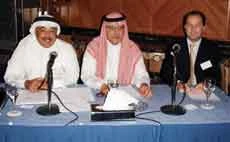
JEDDAH: Deloitte & Touche Bakr Abulkhair & Co., one of Saudi Arabia’s leading professional services firms, hosted a seminar of top tax specialists here on Saturday to deliver insight on a wide range of tax and zakah issues within Saudi Arabia. The seminar explored the latest practice in respect of tax and zakah requirements for both Saudi and non-Saudi businesses within the Kingdom.
These requirements were also discussed in the context of the wider Middle East tax changes and the increasing inbound investment into and outbound investment from Saudi Arabia and considering the wider implications of the growing numbers of treaties being entered into by the government.
“It is very important that companies and businesses in Saudi Arabia understand the tax and zakah requirements and pay their appropriate amount of tax and zakah. We have had great debate as to what best practice should be,” Bakr A. Abulkhair, chairman and chief executive of Deloitte & Touche Bakr Abulkhair & Co., said.
Nauman Ahmed, partner in charge of tax services at Deloitte in the Middle East, who led the main presentations, commented: “We are seeing there is an increased focus on how tax charges affect net profit of businesses in financial statements. This seminar enabled businesses to profit from Deloitte’s leading expertise in tax and zakah and to give them the tools to improve their tax management.”
John Belsey, Deloitte’s lead international tax partner within the Middle East, based in Dubai, shed lights on the context of the Saudi Arabian domestic legislation in relation to the wider tax legislation within the Middle East, which has seen significant changes over the last 12 months as well as in respect of the interpretation of tax treaties, of which there are now 11 which are effective between foreign countries and Saudi Arabia, with another 11 in the pipeline but not yet effective.
Husam H. Sadagah, Deloitte partner in Saudi Arabia, said: “It is very important for tax practitioners to understand the wider international tax developments as they affect the way we structure investments outside the Kingdom and can provide indications as to what changes we might expect in the future to the Kingdom legislation.”